
Pest Control in Dubai
Pest control in Dubai is not one job. Cockroaches in a Marina apartment kitchen, termites in a villa door frame and a mouse in an office pantry each need a different method, so the useful first step is working out what you actually have. Send photos on WhatsApp and we coordinate an independent partner technician to inspect, treat and plan any follow-up.

On this page
- Which pest is it, and what does it need?
- Apartment, villa or office: how the job differs
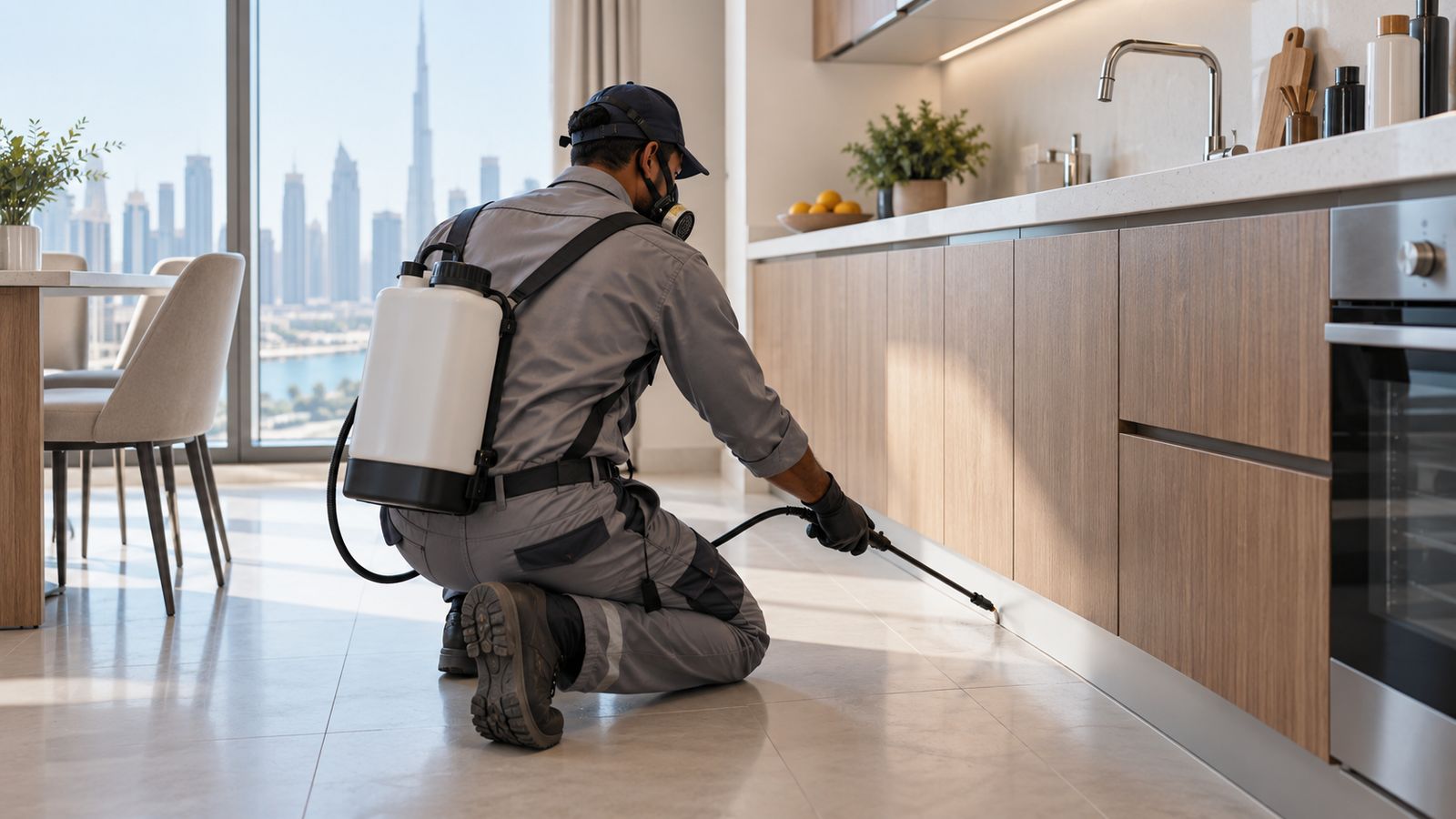
- What a treatment visit involves
- Preparing the home
- Safety with pets, children and food
- Follow-up visits and what “treated” really means
- What affects the quote
- When you do not need pest control
- What is not included
- Areas we coordinate across
- Ready for a quote?
Which pest is it, and what does it need?
Treatment follows the pest, so the quickest way to get a sensible quote is to say what you are seeing and where. These are the problems most often raised in Dubai homes and offices.
- Cockroaches. The most common call in apartments and villas. Small, light-brown German cockroaches live in kitchens and bathrooms and breed fast, while larger ones tend to come up through drains and from outdoor areas. See cockroach control in Dubai.
- Ants. A trail to food or a damp spot, usually from a gap in a wall, window or balcony door. They are easier to treat when you can follow where the trail starts.
- Bed bugs. Bites alone do not prove bed bugs. Live bugs, shed skins or small dark spots along mattress seams do. This one is treated very differently from the others. See bed bug treatment in Dubai.
- Rodents. Droppings along walls, gnawed packaging, scratching in ceiling voids. More common in villas, ground-floor units and around bin and loading areas than in upper-floor apartments.
- Termites. Mostly a villa and wooden-fitting problem: mud tubes, discarded wings, hollow-sounding timber. See termite control for Dubai villas.
- Flies and mosquitoes. These point to a source: standing water in planters, pool covers or AC drip trays for mosquitoes, and rubbish, drains or pet waste for flies. Removing the source matters as much as any spray.
We are a coordination service rather than a pest-control company. We take your details on WhatsApp and send an independent partner technician; the partner does the inspection and treatment. Not every pest needs the same partner or product, which is why the first message matters.
Apartment, villa or office: how the job differs
High-rise apartments. Pests travel between units through shared risers, pipe chases and cable gaps, so a neighbour’s problem can become yours. A treatment inside one flat can be undone if the unit next door is untreated; raising it with building management is worth doing. Access is its own task: the technician needs a time that suits building rules, a service lift or loading bay if equipment is carried up, and sometimes a permit from management. Tell us the tower, floor and any move or work-hours rules when you message.
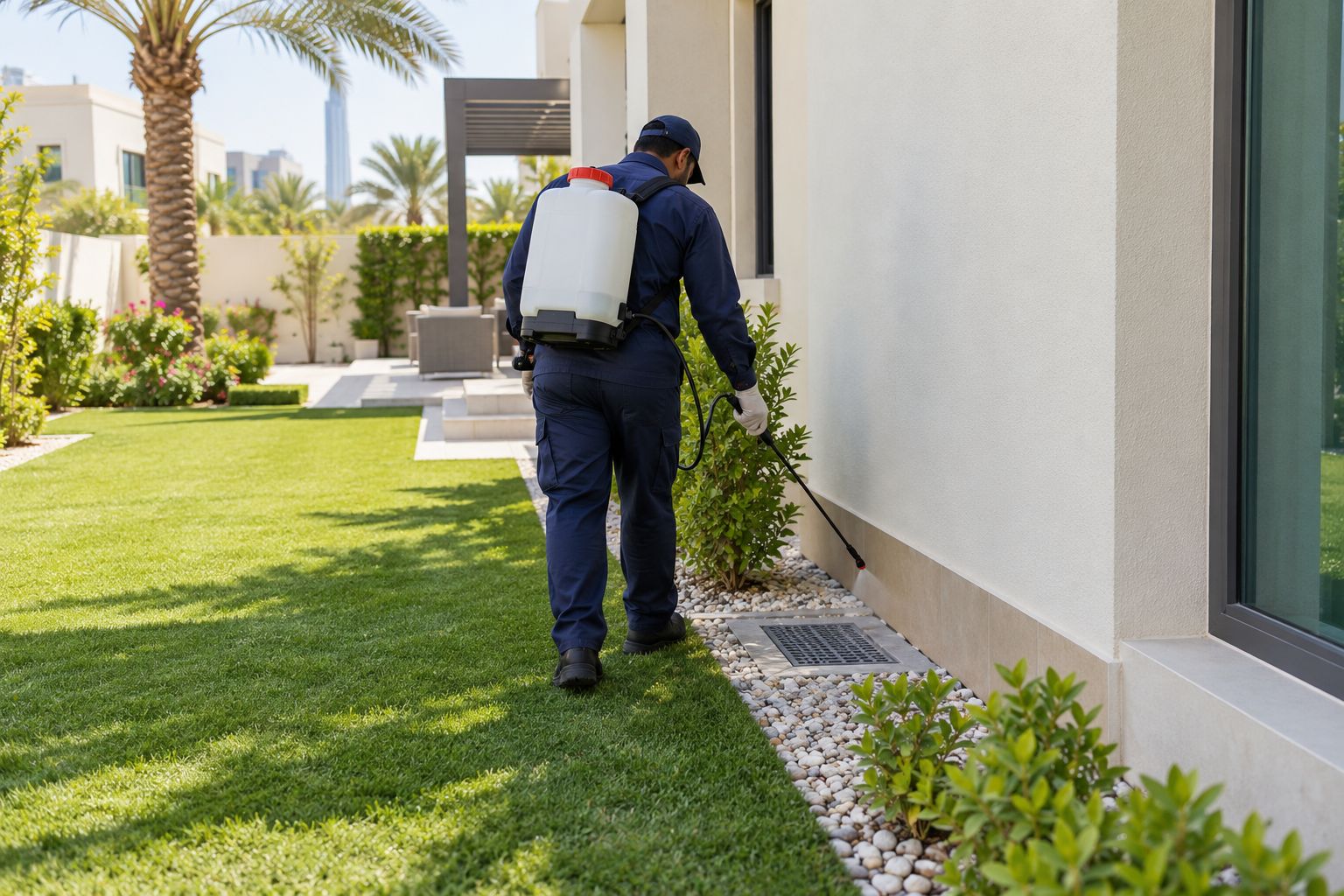
Villas. More ground to cover. Gardens, planters, outdoor drains, maid’s rooms, garages, roof voids and boundary walls all matter. Cockroaches enter through drains and gaps under doors, rodents through roof and wall voids, and termites from soil contact. Expect a villa inspection to include the outside, and a quote that reflects the extra areas and the number of floors.
Offices and shops. Food areas, pantries and waste rooms drive most problems, and treatment usually needs to fit around working hours, with a plan for what staff should do before and after. Tell us the floor area, whether there is a pantry or restaurant unit below or beside you, and when the space is empty.
What a treatment visit involves
- Photos and questions on WhatsApp. Which pest, where, how long, how many people live there, any pets, children, pregnant or elderly residents, and whether anyone has respiratory conditions.
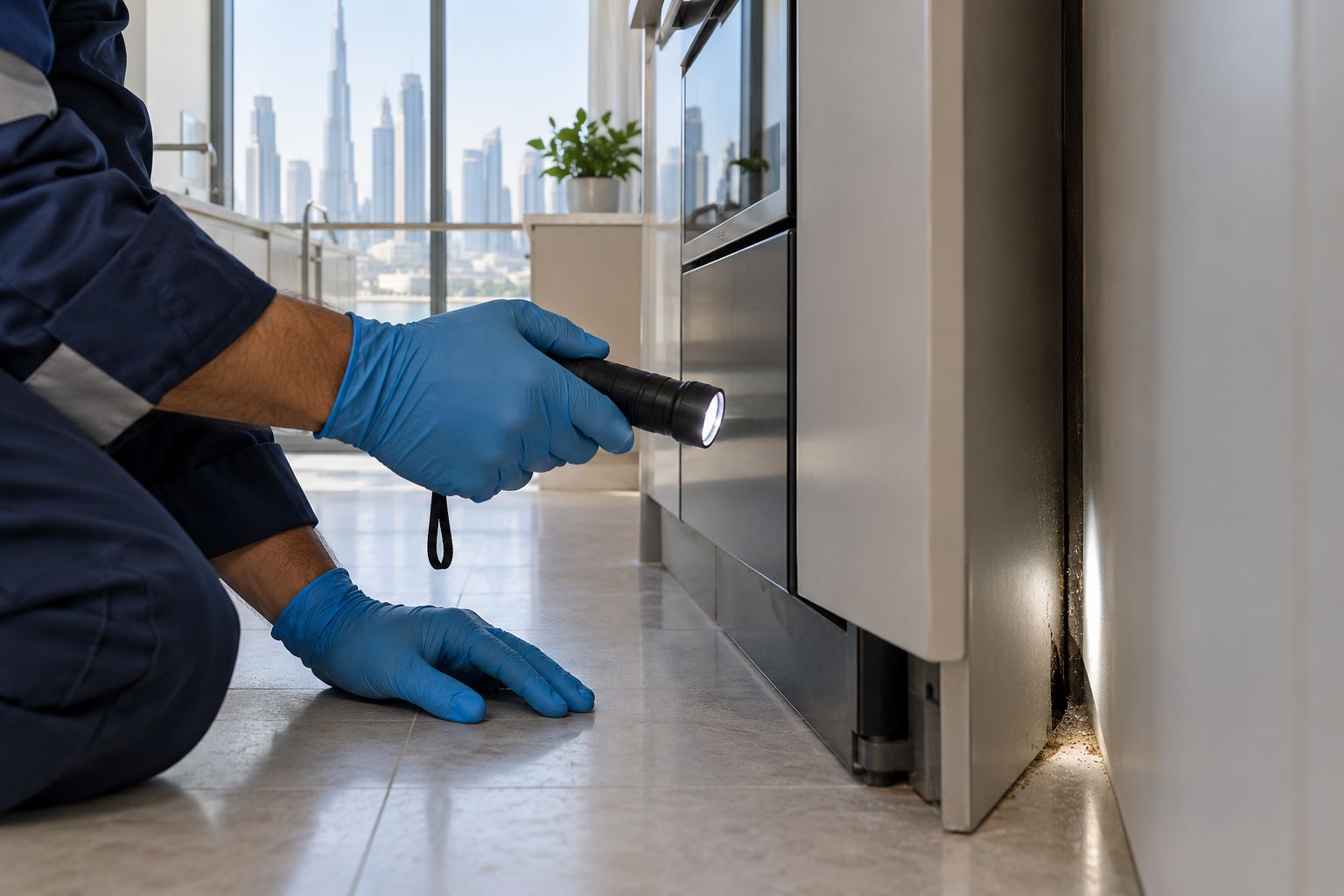
- Inspection. The technician looks at where activity shows, where it might be coming from and what is attracting it. Photos help here too. Bed bugs and termites in particular need inspection before a method is chosen.
- Agreed scope. Which rooms or areas, what method, how long to stay out, and whether a follow-up visit is planned. You should know this before the technician starts, not after.
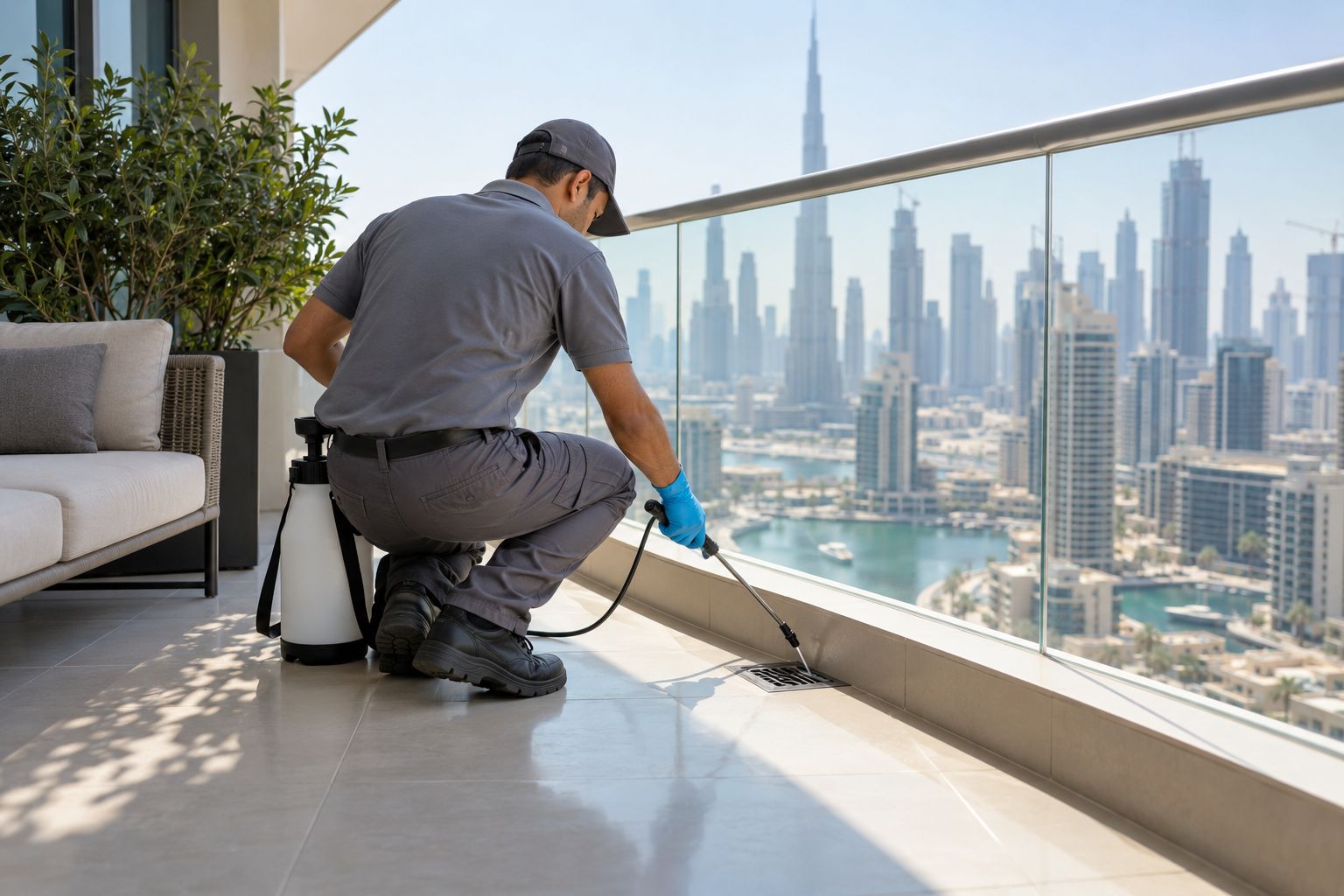
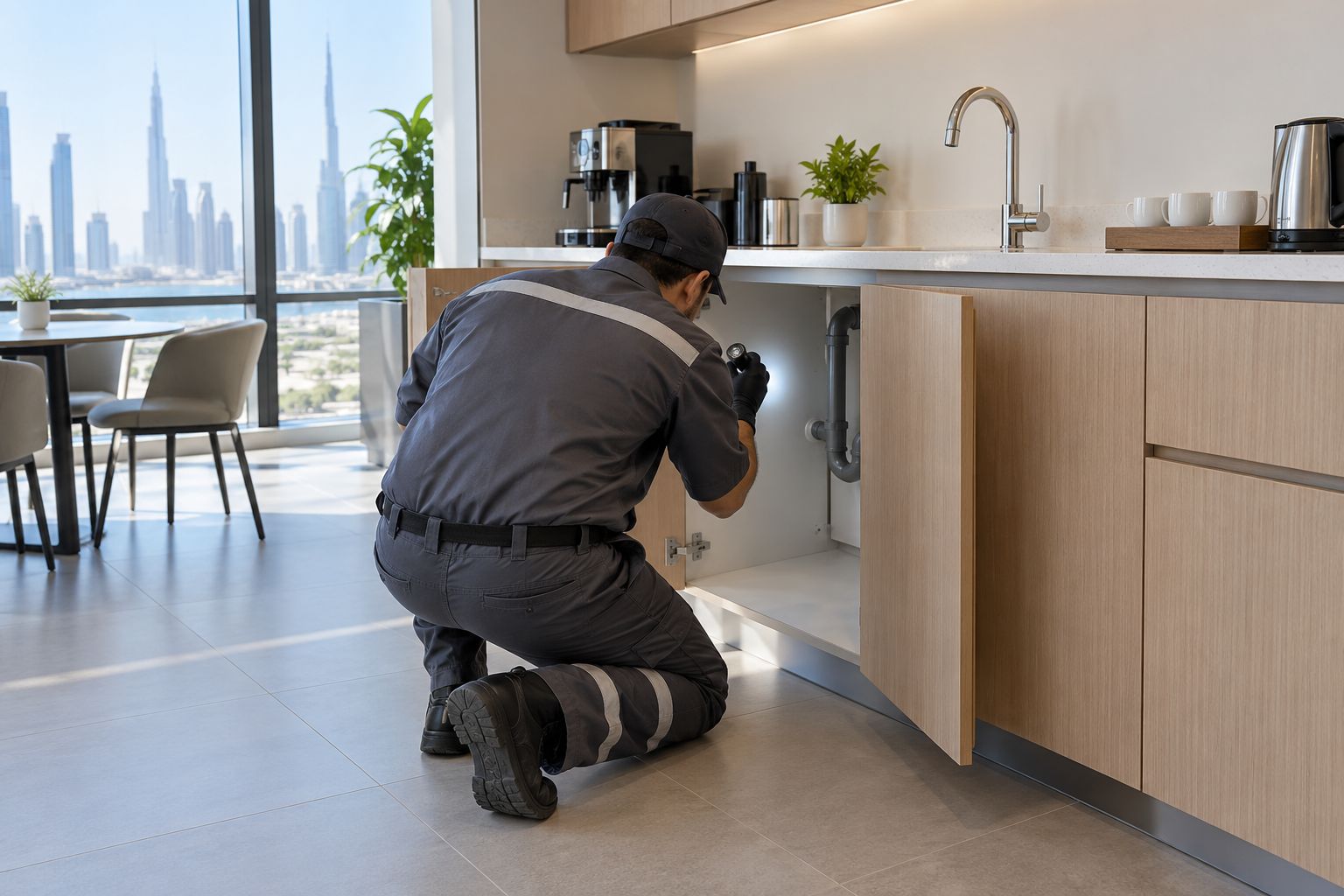
- Treatment. Targeted at the pests’ paths and hiding places rather than blanket spraying: skirting boards, behind and under appliances, drain edges, door frames, balcony corners. Gels, baits, sprays, dusts or traps are chosen to suit the pest and the household.
- Re-entry and airing. You are told when you can go back in, how long to ventilate and what to avoid wiping or washing for a while.
- Follow-up. For anything established, a second visit is normally planned to check results and re-treat where needed.
Preparing the home
Short version: clear access, cover or remove food, and make the pest’s routes easier to reach. A longer room-by-room list by pest type is in our guide to how to prepare for a pest control treatment in Dubai. The basics:
- Empty the area under the kitchen and bathroom sinks and pull out anything the technician must reach behind.
- Put food, pet bowls and utensils in sealed containers or cupboards you will not be wiping afterwards.
- Cover fish tanks and turn off their air pumps if told to.
- Take the bin out and clear drain covers you can lift easily.
- Keep children and pets in another room until the technician says the area is safe.
- Do not spray your own insecticide before the visit. It can scatter pests, hide where they are and affect what the technician can use.
Safety with pets, children and food
Pesticides are designed to affect pests, but they are not harmless to people and animals if used carelessly. In general terms, safe use comes down to three things: the right product for the pest and the setting, correct application, and following the re-entry and airing instructions afterwards. Tell the technician who lives in the home. Ask for the name of the products being used and whether the manufacturer’s safety information is available for you to read. Rodent baits and traps need extra thought if you have pets or young children, and a technician can usually place them in tamper-resistant stations or out of reach.
When you choose a provider, ask them to show their current municipality approval. Pest control is a licensed activity and you are entitled to ask. We are not claiming that Dubai Service Hub or any particular partner holds a specific approval; confirm it directly for the technician who will attend.
Follow-up visits and what “treated” really means
Pests do not always disappear after one visit. Cockroach and bed bug eggs are tougher than adults, rodents may be re-entering through an unsealed gap, and ants can come back if the food or moisture source is still there. That is why a follow-up visit is the normal plan for an established problem, and why it should be agreed upfront with its timing and cost.
Be careful with any promise of a guarantee. A written warranty, if offered, should say which pest, which areas, for how long and what you must do to keep it valid. If you cannot get that in writing, treat it as a sales line rather than a commitment. If the problem persists after treatment, message us with fresh photos so the follow-up can be arranged with the partner, rather than waiting and hoping.
What affects the quote
- The pest. Termite and bed bug work is a different scale from ants or a light cockroach problem.
- Property type and size. Studio, three-bedroom apartment, villa with garden, office floor.
- Severity. A few sightings versus a breeding population.
- Number of visits. One treatment, or treatment plus planned follow-ups.
- Access and timing. Tower rules, permits, gated community pass, evenings or weekends.
- Extras. Rodent proofing, gap sealing, drain work and garden areas are usually separate.
For a deeper look at comparing quotes and spotting red flags, see our guide to pest control prices in Dubai. We do not publish a flat price list because it would be wrong for most homes.
When you do not need pest control
- A single insect. One ant or one flying cockroach in summer, with no more sightings after a few days, may be a visitor. Clean, close the gap if you see one, and watch.
- Mosquitoes in a pool-free flat. Look for standing water first: a planter saucer, a pool cover, an AC tray. Remove it before paying for treatment.
- Insect-like specks that turn out to be dust or fabric fibres. If unsure, send a photo before booking.
- Bites with no other signs. Bites alone are not proof of bed bugs. Check the mattress seams and send photos.
What is not included
Pest control does not repair the building. Sealing cracks, replacing rotten timber, fixing leaking pipes and cleaning up after an infestation are separate jobs. We can coordinate some of them: villa maintenance for gaps and repairs, mattress cleaning and sofa cleaning for upholstery, and junk removal to clear stored items that give pests somewhere to hide. Treatment also cannot guarantee a result without your cooperation on prep and hygiene.
Areas we coordinate across
Pest problems show up everywhere from towers in Dubai Marina, JVC and Business Bay to villas in Arabian Ranches and older homes in Al Barsha. Send your area, building or community, and the property type, and we will check availability with a partner.
Ready for a quote?
Message us on WhatsApp with the pest you think you have, a photo, your area and property type. You will get a quote based on what you send, and an independent partner technician will inspect before any treatment starts.
Frequently asked questions
- How do I know which pest I have?
- Send clear photos of the insect or droppings, plus where and when you see them. Cockroaches appear at night in kitchens and bathrooms, ants follow trails to food, bed bugs leave small dark spots on mattress seams, and rodents leave droppings along walls. If you can safely keep a specimen in a sealed bag, the technician can identify it at the visit.
- What happens during a pest control visit?
- The technician starts by inspecting and asking where you have seen activity, then agrees what will be treated. Treatment targets the places pests travel and hide, such as skirting boards, under sinks, drains and balcony corners, not every surface. You are told how long to stay out and when to ventilate, and whether a follow-up visit is planned.
- Do I need to leave the house during treatment?
- It depends on the method and the product. Some gel and spot treatments need no time away, while sprays and fogging usually mean leaving for a few hours, with pets, children and food out of the way. Ask the provider for the exact re-entry time for the product they will use and follow it, rather than a general rule.
- Is pest control safe for pets, children and food?
- It can be, when the right product is used correctly and you follow the preparation and re-entry instructions. Cover or remove food, bowls and fish tanks, keep pets and children out of treated areas until the product has dried and the room is aired, and tell the technician about anyone who is pregnant, elderly or has asthma so the method can be adjusted.
- Will one visit be enough?
- Sometimes, for a light, recent problem. Established cockroach, bed bug or rodent problems commonly need a planned follow-up because eggs and hidden pests survive the first visit. No honest provider can promise a pest-free result from one visit without seeing the property, so ask what follow-up is planned and what it costs.
- How much does pest control cost in Dubai?
- It depends on the pest, the size and type of property, how severe the problem is, how many visits are planned and how easy access is. A single-room ant problem and a villa termite treatment are very different jobs. We quote after you send photos and basic property details, so you see a price for your situation rather than a generic one.
- Does my villa AMC cover pest control?
- Usually not. Most villa maintenance contracts list pest control as an exclusion because it is a separate specialist service, but contracts differ. Check your contract's exclusions list. If pests are excluded, you can book pest control separately and it does not affect the maintenance cover.
- Who pays, the tenant or the landlord?
- Check your tenancy contract first, because it varies. A pest problem that arrives with the property, such as termites in the structure or an infestation present at move-in, is often argued to be the landlord's concern, while problems caused by how the home is kept are often the tenant's. Photograph the issue and raise it in writing early.
Related services
Jobs people often book alongside this one.
Related guides
Straight answers to the questions people ask before booking this service.