
Termite Control in Dubai
Termites usually go unnoticed in a Dubai villa until a door frame sounds hollow or mud tubes appear on an exterior wall. Termite control starts with inspection to find the colony's route and the extent of the damage, then a barrier, bait or wood treatment, and a planned re-check. Send photos on WhatsApp and we arrange an independent partner technician.
On this page
- Why termites are mostly a villa problem
- Signs to check for
- What an inspection involves
- What to do before the inspection
- How termite control is done
- After treatment
- Villa types and conditions
- What affects the quote
- Termites or something else?
- When you do not need termite control
- What is not included
- Send photos for a quote
Why termites are mostly a villa problem
Termites are social insects that live in colonies and feed on cellulose: timber, cardboard, paper and the paper facing on plasterboard. The common ones in this region are subterranean termites, which nest in the soil and reach buildings through mud tubes they build across surfaces, or through cracks in foundations and gaps around pipes. That is why the problem is concentrated in villas: ground-floor timber, garden beds against walls, soil contact and irrigation moisture all give them what they need. High-rise apartments are less exposed, though ground-floor and lower-floor units with timber fittings can be affected.
Dubai specifics make it easier to miss. Termites avoid light and work behind paint and plaster, so a wall can be hollowed out before you see anything. Irrigation lines, leaking pipes and AC condensate keep soil damp next to the foundation, which they favour. Villa gardens are watered all year, so there is no dry season to slow them down.
If you are dealing with a general pest problem rather than wood-related damage, start with the main pest control in Dubai page.
Signs to check for
- Mud tubes. Thin, earthen-coloured tubes about a pencil width running up foundation walls, skirting boards, pipe entry points and door frames.
- Discarded wings. Small, equal-sized wings left near windowsills, doors or lights, which usually follow a swarm.
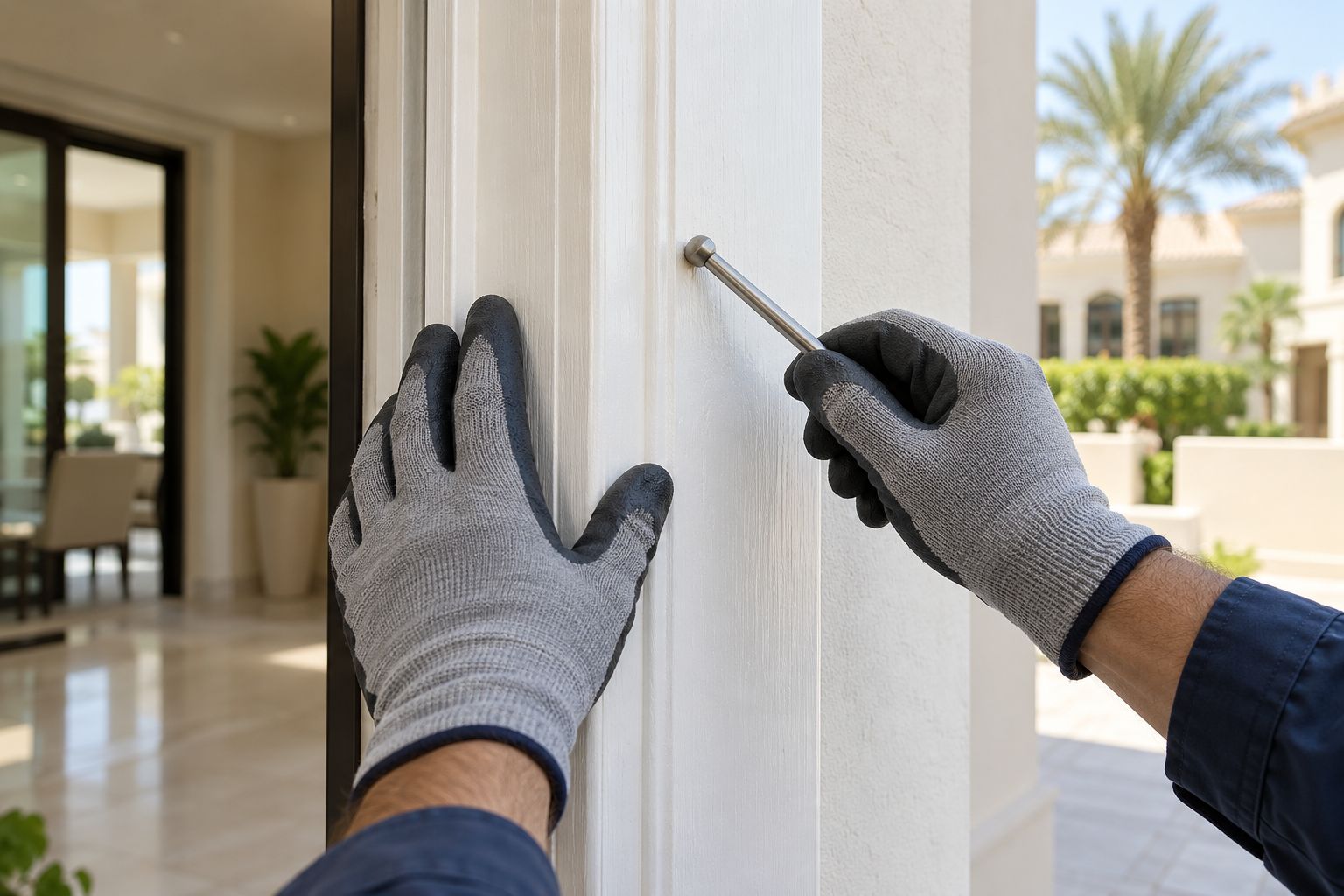
- Hollow-sounding wood. Tap door frames, skirting boards and the base of built-in wardrobes with a knuckle or screwdriver handle; a papery or hollow sound is a warning.
- Paint changes. Bubbling, blistering or small pinholes in paint over timber.
- Frass. Tiny dry pellets, usually from drywood termites, that collect under timber in small piles.
- Stuck doors and windows. Timber frames can warp as moisture and tunnelling affect them.
None of these proves termites on its own: leaks, humidity and poor paint can cause some of the same effects. That is the reason to photograph what you see and have an inspection instead of guessing.
What an inspection involves
- Questions. How long you have seen signs, where, any past treatment, any leaks or renovation work, and whether the villa is under developer warranty.
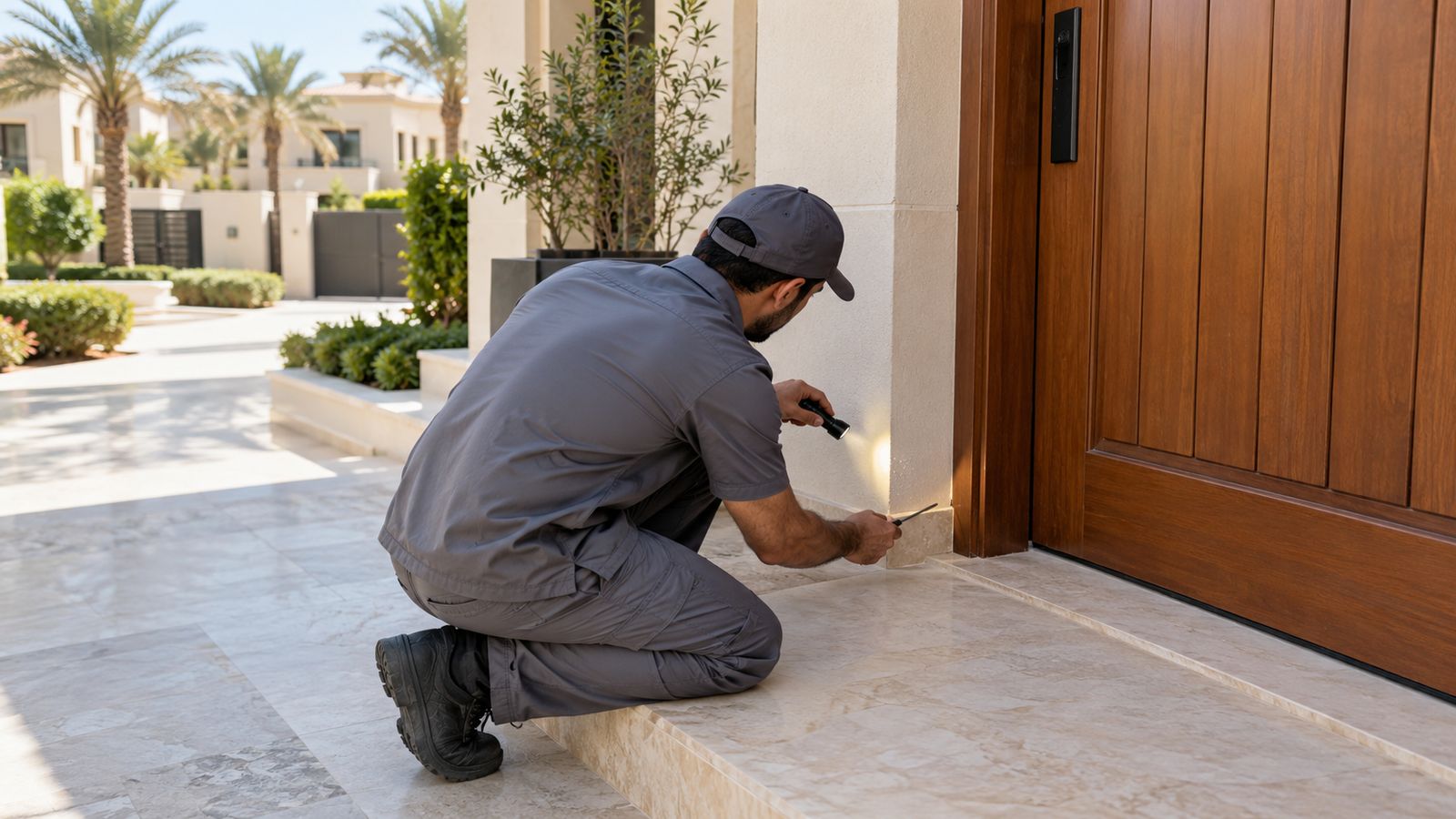
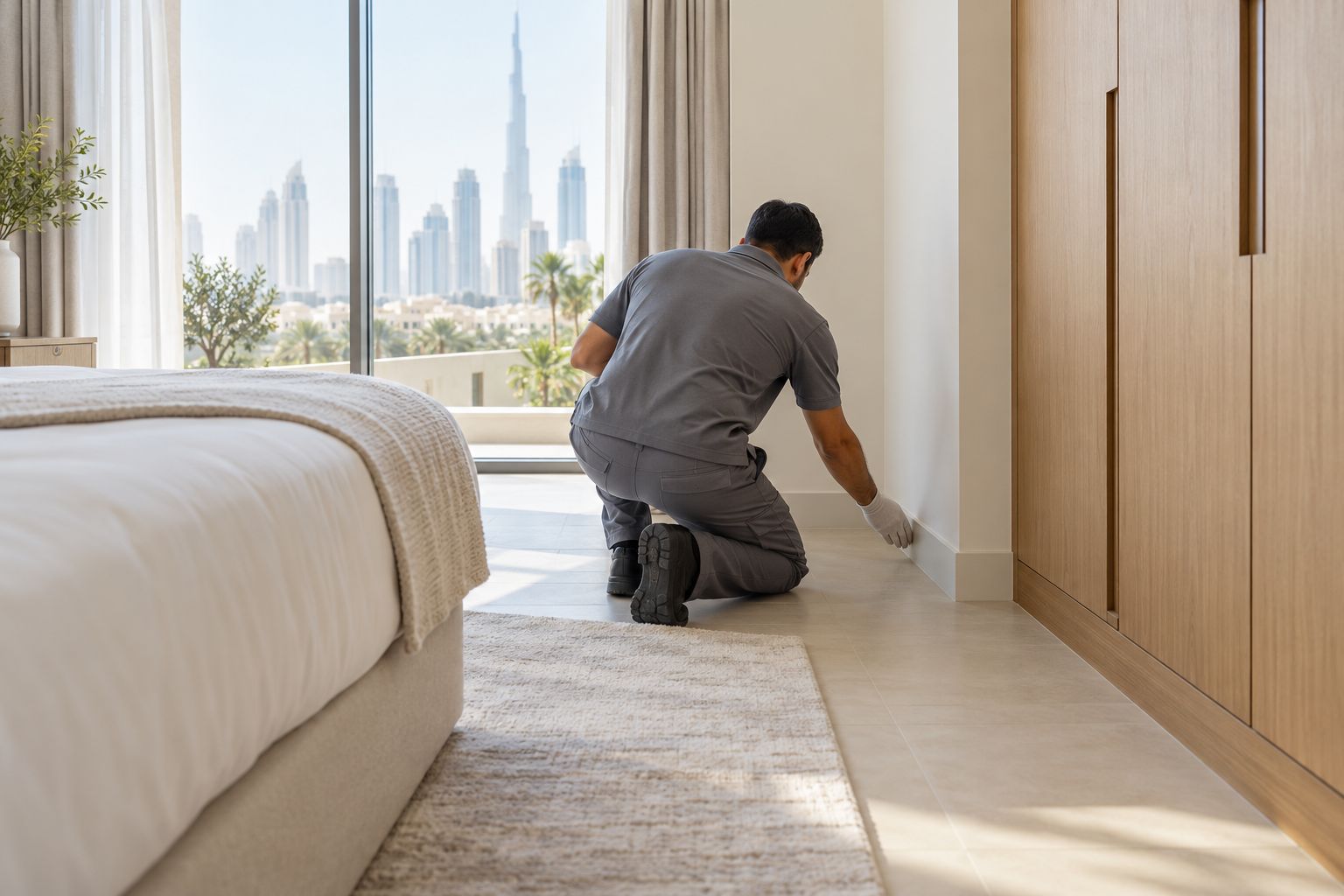
- Visual check. Foundation edges, exterior walls, door and window frames, skirting boards, built-in wardrobes, kitchen units and roof voids where accessible.
- Tapping and probing. Timber is tapped and probed to find hollow or damaged sections.
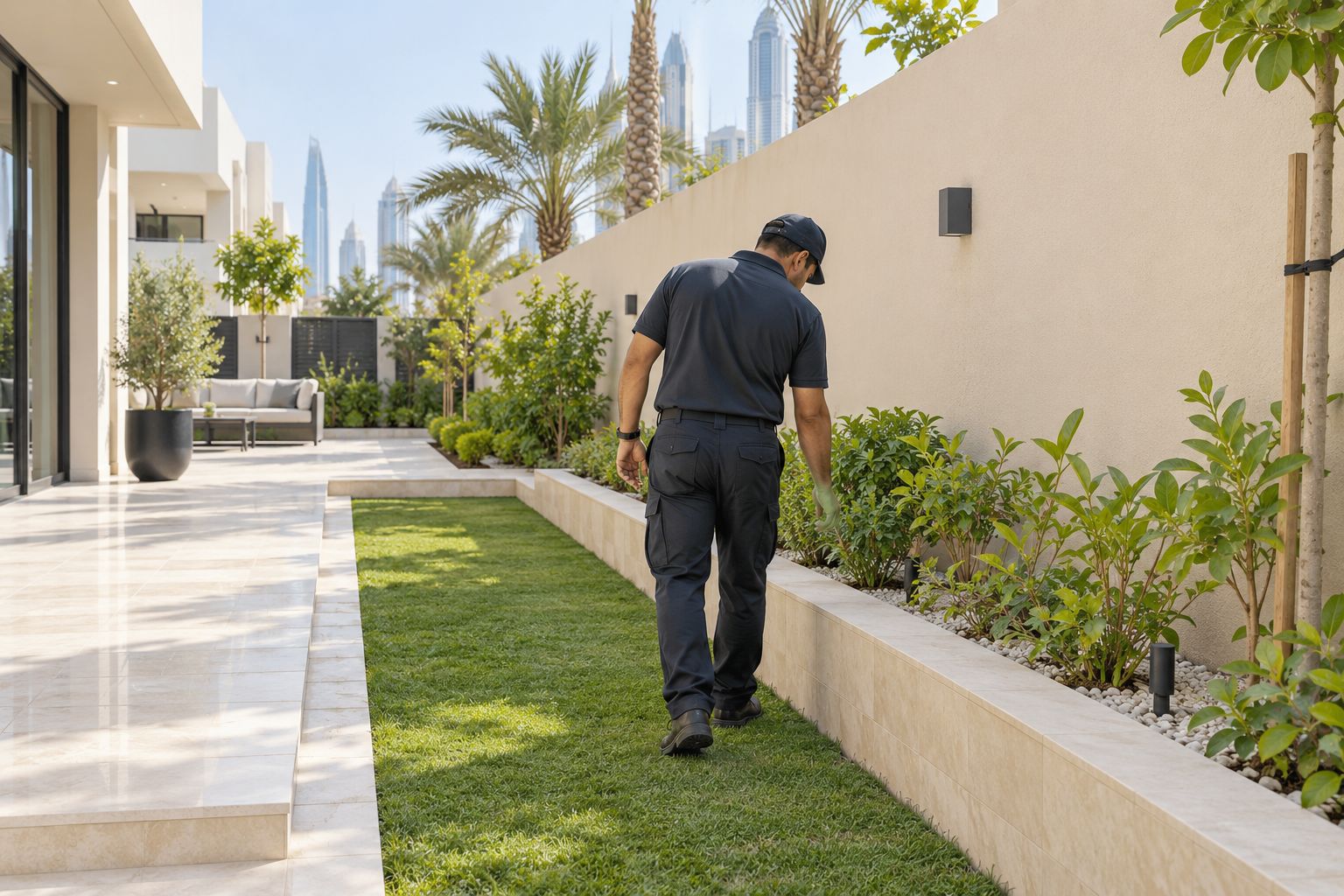
- Moisture and conditions. Leaks, irrigation near walls, planter beds, buried timber and stored cardboard.
- Findings. The technician explains whether termites are active, where they are coming from and how far they appear to have spread, and recommends a method.
You should receive this in plain terms and a proposed scope before any treatment starts. A quote given over the phone for a villa termite job without seeing the property should make you cautious.
What to do before the inspection
Do not rip out timber or scrape off mud tubes before the technician has seen them; the evidence shows where the colony is travelling. Take dated photos of each sign with something for scale, such as a coin. Note which rooms and walls are affected, and when you first noticed. Move stored cardboard and paper away from walls, since it is food for termites, and switch off any irrigation that runs against the wall until the visit. If there has been a leak, a renovation or a pipe repair near the affected area, tell us; moisture history helps the technician find the source.
If a swarm of winged insects appears indoors, close the room, switch off lights they are drawn to and vacuum up the wings and insects, then keep a few in a sealed bag for identification.
How termite control is done
The method follows the findings.
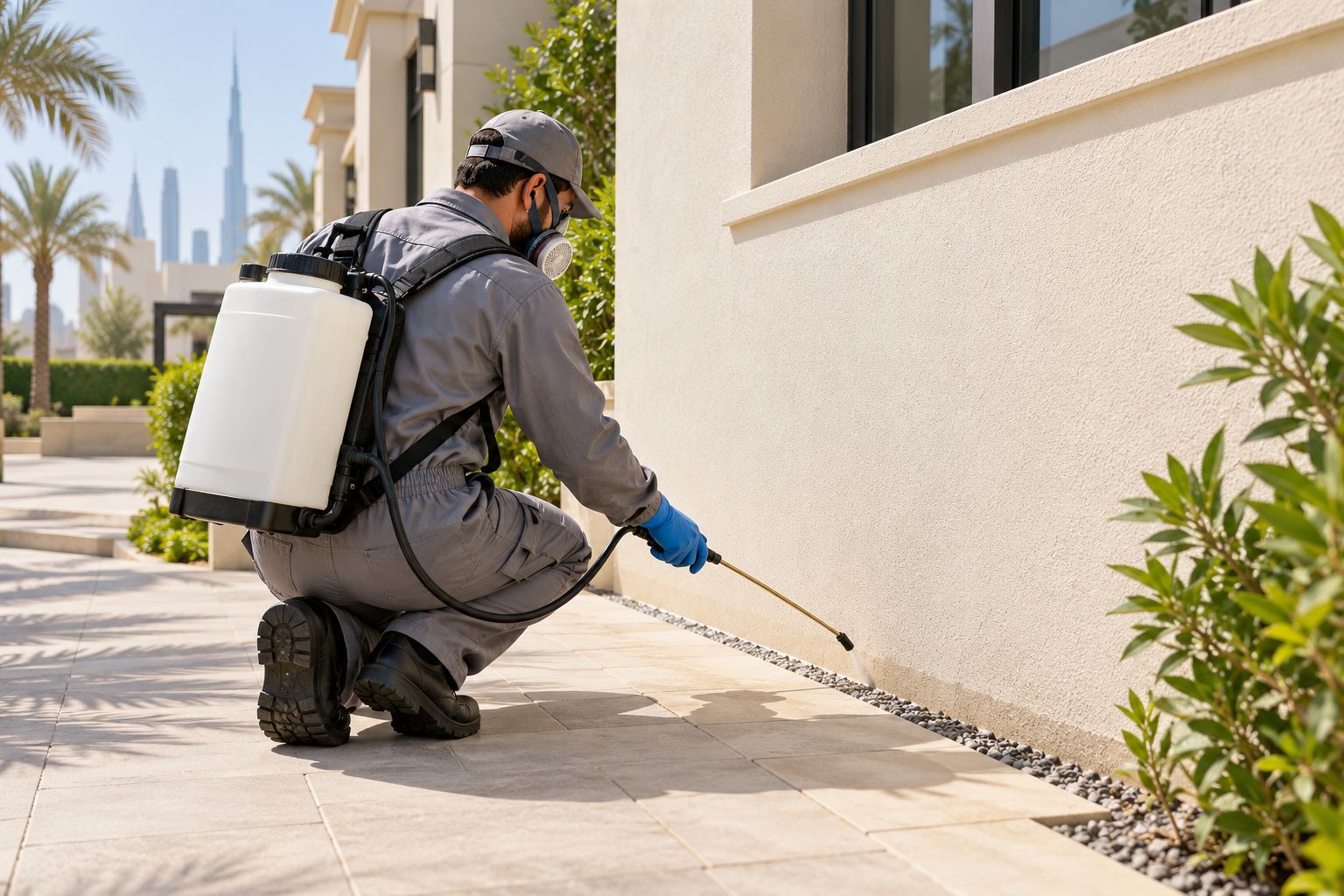
- Soil barrier treatment. A treated zone in the soil around the foundation or along walls, so termites crossing it are affected. Usually done by trenching or drilling and injecting along the perimeter.
- Baiting systems. Stations placed in the soil that termites feed on and carry back to the colony. Slower, and used where drilling or soil treatment is hard.
- Direct wood treatment. Treatment injected into or applied to affected timber, door frames and built-in joinery.
- Spot treatment of entry points. Mud tubes removed and the surface or gap treated.
Many villas need a combination: treat the soil, treat the affected timber, then check at intervals. Ask the technician which method is proposed and why, how long you must stay out of treated areas, how water tanks and pools will be protected, and what follow-up is planned.
After treatment
- Do not disturb treated soil or barrier zones for the period advised; avoid digging or heavy watering at the base of walls.
- Leave mud tubes as advised. Technicians often want to see whether activity stops.
- Fix moisture sources. Leaks and irrigation near walls help termites return.
- Plan a re-check. Inspect after a few weeks and again later in the year; ask for dates.
- Repair damaged wood after treatment, not before. Villa maintenance can help with joinery and repairs once the colony is dealt with.
Be careful with promises. Any written guarantee should say which parts of the property it covers, how long it lasts and what you must do to keep it valid, such as annual inspections. If you cannot get that in writing, do not rely on it.
Villa types and conditions
Gated community villas. Standardised construction means recurring weak points: garden beds against ground-floor walls, irrigation lines, pipe entry points and patio doors. Some communities have contractor access rules and require a gate pass; tell us your community when you message. Ask the developer or community management whether any pre-construction soil treatment was done and whether it comes with documentation. If the villa is still under developer defect liability, report the problem in writing straight away.
Older independent villas. More timber, more past repairs and often more buried debris. Older homes often have accessible timber door frames, built-in wardrobes and roof structures that deserve a closer check.
Extensions, maid’s rooms and annexes. Newer additions can have different construction and soil contact, and are often where the first signs show.
What affects the quote
- Villa size and number of floors.
- Method: soil barrier, baiting, wood treatment or a combination.
- Extent of activity and damage found at inspection.
- Perimeter length and ground conditions, such as paving or hard surfaces that need drilling.
- Number of follow-up visits and re-checks.
- Access: gate rules and timing.
Because these vary so much, termite jobs are quoted after inspection rather than by a flat fee. Our guide to pest control prices in Dubai explains how to compare quotes fairly.
Termites or something else?
Flying ants and termites look alike but differ: ants have a narrow waist and unequal wings, termites have a straight body and equal wings. If you are seeing small trails of ants, see the ant guidance on the main pest control page. If you are finding insects around your kitchen, a different treatment applies; read cockroach control in Dubai.
When you do not need termite control
- A single flying insect near a light with no mud tubes, wings or damage. Collect it in a bag and send a photo.
- Cosmetic paint bubbling near a known leak and no sign of termite activity. Fix the leak first and monitor.
- Hollow sound explained by construction, such as a hollow-core door. Tap the same type of door elsewhere to compare.
What is not included
Termite control stops the colony; it does not repair eaten timber, fix leaks or waterproof foundations. Those are separate jobs. Treatment also cannot guarantee that termites will not return, particularly if moisture and soil contact are unchanged.
Send photos for a quote
Message us on WhatsApp with photos of the signs you have seen, the community or area, and the villa type. An independent partner technician inspects the property first and gives you a scope, method and follow-up plan before any treatment begins.
Frequently asked questions
- What are the signs of termites in a Dubai villa?
- Look for thin mud tubes on walls, skirting boards or foundations, discarded wings near windows and doors, wood that sounds hollow when tapped, bubbling or sagging paint over timber, and small piles of fine droppings. Winged insects gathering at lights are also a sign. Photograph what you see and send it so an inspection can confirm.
- Do apartments get termites too?
- They can, but it is mainly a villa and ground-level problem because termites come from soil and reach timber at or near ground contact. Apartments with wooden doors, frames, cabinets or parquet are not immune, particularly on lower floors, though the pattern is less common. If you see mud tubes or discarded wings, ask for an inspection.
- Is termite treatment safe for my family and pets?
- Treatments are designed for use in homes when applied correctly, but safety depends on the product, the method and following the technician's instructions. Tell the technician about children, pets, anyone pregnant or with asthma, and ask what will be used and when you can re-enter. Water tanks, pools and edible plants near the treatment area need particular care.
- How long does termite treatment take?
- Inspection is usually the quicker part. Treatment time depends on the size of the villa, the length of the perimeter, the ground surface and the method, and monitoring or re-checks continue over the following weeks. Ask the technician for a plan with expected duration and dates once the inspection is done.
- Is termite damage the landlord's responsibility?
- It depends on your tenancy contract and the cause. Damage to the structure or fixed timber is often treated as a building matter for the landlord, while pests blamed on how a tenant keeps the home are argued the other way. Photograph the signs, report them in writing straight away and check the contract's maintenance clause.
- Can I treat termites with a spray from the shop?
- Not effectively. Surface sprays reach only the termites they touch, while the colony is in the soil or inside the timber. Termite control needs inspection to find the entry point and a barrier, bait or timber treatment applied by a technician. Spraying first can make it harder for a technician to see where termites are active.
- Does my villa AMC cover termites?
- Probably not. Most villa maintenance contracts list pest control as an exclusion, and termite work is a specialist job. Read your contract's exclusions. Even where termites are excluded, the maintenance team can still repair wood and fix leaks once the treatment is done, since moisture often feeds the problem.
Related services
Jobs people often book alongside this one.
Related guides
Straight answers to the questions people ask before booking this service.