
Signs of Termites in Dubai Homes and What to Check
Quick answer
Possible signs of termites include thin mud tubes on walls or skirting, discarded wings near windows or lights, hollow-sounding timber, bubbling paint over wood and tiny droppings below timber. None proves termites alone, so photograph what you see, avoid disturbing it and ask for an inspection.
On this page
The short answer
Termites are hard to spot because they avoid light and work inside timber, behind paint and under plaster. By the time damage shows, the activity may have been going on for a while. The practical approach is to know the handful of signs that are worth taking seriously, to check the likely places, and to ask for an inspection when something looks off, instead of waiting to be certain. No single sign proves termites, and several have innocent explanations, which this guide covers.
This guide is about recognising possible signs. For how termite treatment works, see how termite treatment works in Dubai, and for the service page, see termite control in Dubai.
The main signs
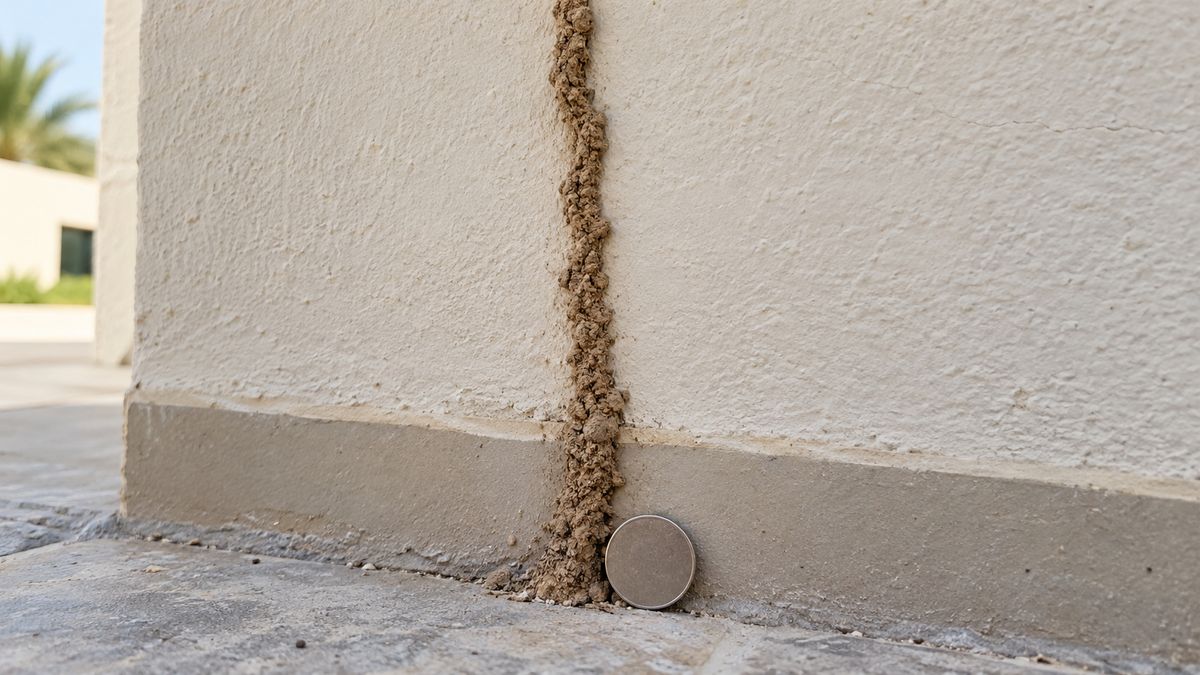
Mud tubes. Subterranean termites build thin, earth-coloured tubes to travel between soil and timber. They are often about the width of a pencil, and run up foundation walls, skirting boards, pipe entry points and door frames. Tubes can be dry and crumbly if abandoned or fresh and damp if in use.
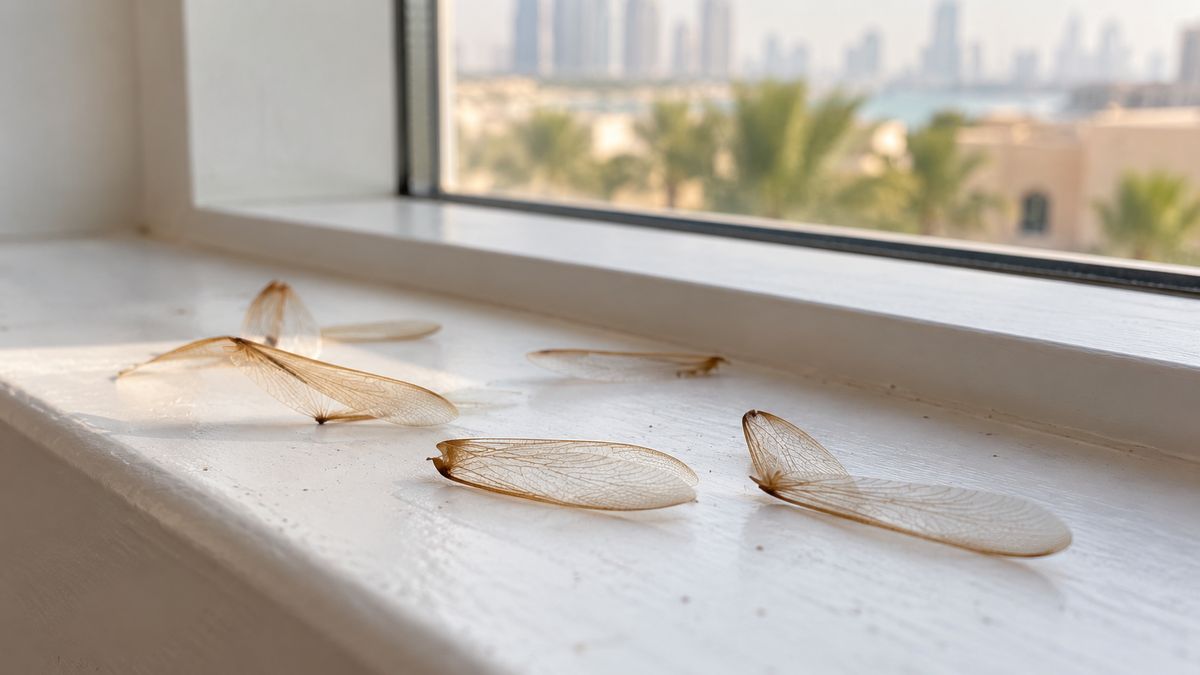
Discarded wings. When a colony swarms, winged termites emerge and shed their wings. Small, equal-sized, translucent wings in a pile on a windowsill, door threshold or under a light can mean a swarm has occurred nearby or inside.
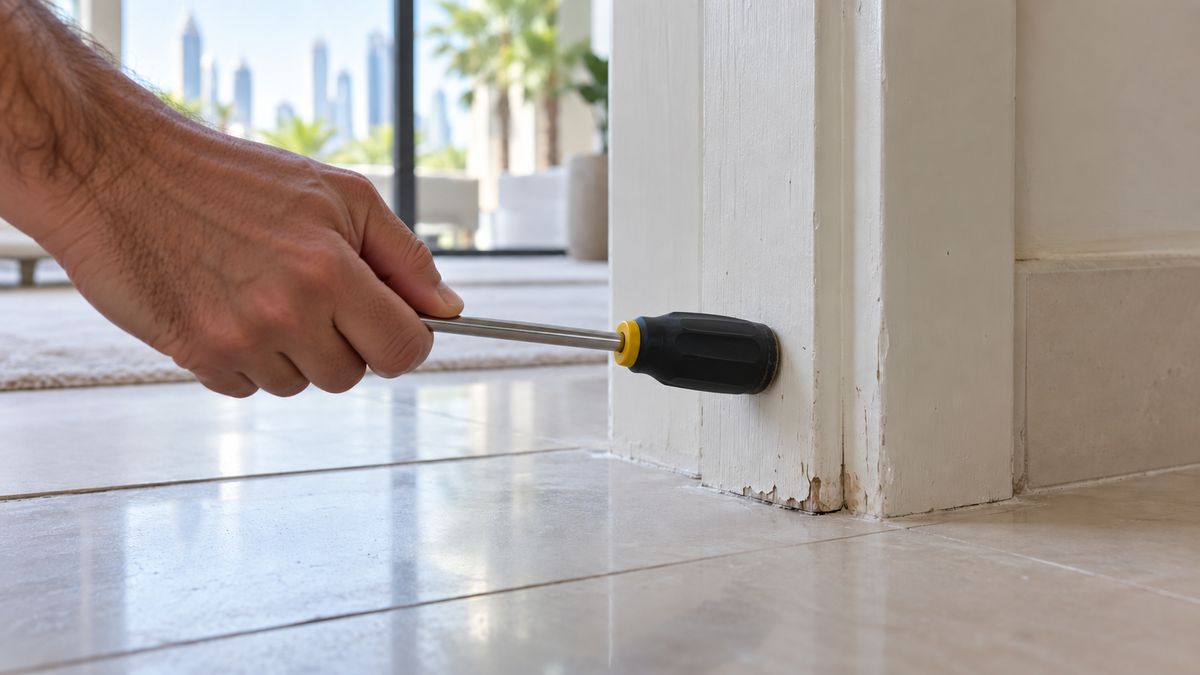
Hollow-sounding timber. Tap door frames, skirting boards, the base of built-in wardrobes and window frames with a knuckle or screwdriver handle. A papery, hollow or dull sound compared to the same item elsewhere is worth noting.
Paint changes over wood. Bubbling, blistering, small pinholes or a faint wavy pattern in paint over timber or on skirting boards can come from tunnelling underneath.
Frass. Some termites, particularly drywood types, push out tiny dry pellets that collect under timber in small piles. They can look like fine sand or sawdust.
Doors and windows that stick. Timber frames can warp when tunnelled or when moisture is present. A door that suddenly sticks may be a moisture problem, a termite problem or simply a seasonal change.
Swarmers indoors. Winged insects gathering around lights, especially in the evening, particularly if you also find wings.
Where to look
Villas first, and ground level first.
- Foundation edges and external walls, especially where garden beds, planters or irrigation lines sit against the wall.
- Pipe entries and cable entries through walls or slabs.
- Door frames, skirting boards and architraves at ground level.
- Built-in wardrobes and kitchen units that sit against external walls.
- Maid’s rooms, annexes, garages and storerooms, where cardboard and timber are often stored against walls.
- Roof voids and timber structures where accessible, and only safely.
- Garden timber: fences, pergolas, planters, sleepers and stored wood.
Apartments are less exposed, but ground-floor and lower-floor units with timber joinery or parquet are worth checking if you see anything suspicious.
What can look like termites but is not
Several things give the same visible effect, which is why a photo and an inspection beat a guess.
- Leaks and damp: bubbling paint, soft skirting and warped frames are very often water, not insects. A leaking pipe, AC condensate or irrigation against a wall can do all of it. If you see water marks, read what to do in a plumbing leak and fix the moisture source.
- Flying ants: they swarm too, but have a narrow waist and unequal wings.
- Hollow-core doors: many interior doors are hollow by design.
- Rot or poor workmanship: soft or crumbling timber can have nothing to do with termites.
- Dust and old plaster trails: dust lines and cracked plaster can resemble mud tubes at a glance.
- Other wood-boring insects: some produce similar-looking pellets.
If the signs are cosmetic and sit near a known leak, fix the leak first and monitor. If you are unsure, photograph and send them.
What to do when you see a sign
- Do not disturb it. Leave mud tubes in place. The evidence shows where the colony is travelling, and breaking tubes can make the picture harder to read.
- Photograph each sign with a coin or ruler for scale. Add date, room and wall.
- Note the history. When you first noticed, whether there has been a leak, renovation, pipe repair or new landscaping, and whether any treatment was done before.
- Move cardboard, paper and timber away from walls, since they are food.
- Switch off irrigation that runs against the affected wall until the inspection.
- Do not spray. Shop sprays reach only the termites they touch, and can make it harder to see where activity is.
- Keep a sample. If you find swarming insects or wings, a few in a sealed bag help with identification.
- Report in writing if you rent or if the villa is under a developer’s defects period.
Then ask for an inspection. Our page on termite control in Dubai explains what an inspection involves. If you are not sure whether the problem is termites or another pest, the main pest control page covers other possibilities.
Why timing matters
Termites can work for some time before showing on the surface, and damaged timber cannot easily be restored. That does not mean every faint sign is an emergency; many are not. It means an inspection is a sensible response to a genuine sign, and waiting months to see if it “gets worse” is less sensible. There is no reliable rule of thumb for how fast damage progresses, so be wary of anyone who offers one.
Conditions that make homes more attractive to termites
- Soil and wet ground in contact with walls, pipes and timber.
- Irrigation lines or planters against external walls.
- Leaking pipes, condensate lines or poor drainage near foundations.
- Cardboard, paper and timber stored against walls.
- Timber joinery at ground level, including doors and frames.
- Buried or leftover timber from construction or landscaping.
Reducing moisture and keeping stored items away from walls will not guarantee anything, but removes some of what termites look for.
Landlords, tenants and developers
If you rent, tell your landlord or agent in writing as soon as you find a sign, with the photographs, and read the maintenance clause of your tenancy contract, which sets out who is responsible for what. If you own a newer villa, check whether it is within a developer defects period and ask the developer or community management whether pre-construction soil treatment was done and documented, because that is a question worth asking rather than assuming. If you have a maintenance contract, note that pest control is commonly excluded, as explained in our guide to what a villa AMC includes.
After the inspection
A good inspection should tell you in plain terms whether termites are active, where they are likely entering and how far the activity appears to extend, and recommend a method, with follow-up. Be cautious about a firm villa quote given without seeing the property. Once the problem is dealt with, damaged timber and finishes can be repaired; villa maintenance coordinates joinery and repair work. Costs vary with the findings; our guide to pest control prices in Dubai explains how to compare quotes.
What to send for an inspection
Send dated photos of each sign with something for scale, the community or area, the villa type, which rooms and walls are affected and when you first noticed. Add any history of leaks or renovation. We coordinate a partner technician to inspect and explain what they find before any treatment starts.
Frequently asked questions
- What are the first signs of termites in a house?
- Early signs are often subtle: a thin mud tube on a wall or skirting, a few discarded wings near a window, or timber that sounds hollow when tapped. Paint that bubbles over wood is another. Because causes such as leaks can look similar, photograph the signs and have them inspected rather than guessing.
- How can I tell termite wings from ant wings?
- Termites that swarm have two pairs of wings of equal length and a straight, thick-waisted body, while flying ants have a narrow waist and front wings longer than the back pair. Discarded wings found in a pile near a window or door can point to a swarm. A sealed bag with a few for identification helps.
- Do termites make a noise?
- Some can, but you should not rely on it. Faint clicking or rustling inside timber is sometimes reported in quiet rooms, though it is not a dependable test. A hollow or papery sound when you tap the wood is a more practical check, and still needs confirming by an inspection.
- Is hollow wood always a sign of termites?
- No. Many interior doors are hollow by design, and moisture, rot or poor workmanship can also leave wood soft or hollow. Tap a similar door elsewhere in the home to compare. If one frame or skirting sounds different from the rest, or a screwdriver sinks in easily, get it inspected.
- Can termites live in apartments?
- It is much more common in villas and ground-level homes, because subterranean termites come from the soil. Lower-floor apartments with timber frames, joinery or parquet can still be affected. If you see mud tubes, wings or damaged wood in an apartment, report it to building management and ask for an inspection.
- What should I do if I think I have termites?
- Do not scrape off mud tubes, rip out wood or spray the area. Take dated photos with a coin for scale, note which rooms and walls are affected and when you first saw signs, move cardboard away from walls and switch off irrigation against the wall. Then ask for an inspection.
- Is a termite problem the landlord's responsibility or the tenant's?
- It depends on your tenancy contract and the cause. Damage to the structure or fixed timber is often argued as a building matter, while problems blamed on the way the home is kept are argued the other way. Photograph the signs, report them in writing at once and check the maintenance clause.
- How quickly do termites cause damage?
- There is no reliable general timeline, because it depends on the species, the size of the colony and the timber involved. Termites work out of sight, so damage can be advanced before it shows. That is why early inspection of suspicious signs is better than waiting to see whether things get worse.
Read next
Related services
Need this sorted rather than researched?
Send a WhatsApp message with what you are seeing and we will come back with a quote.