Sofa & Upholstery Cleaning in Dubai
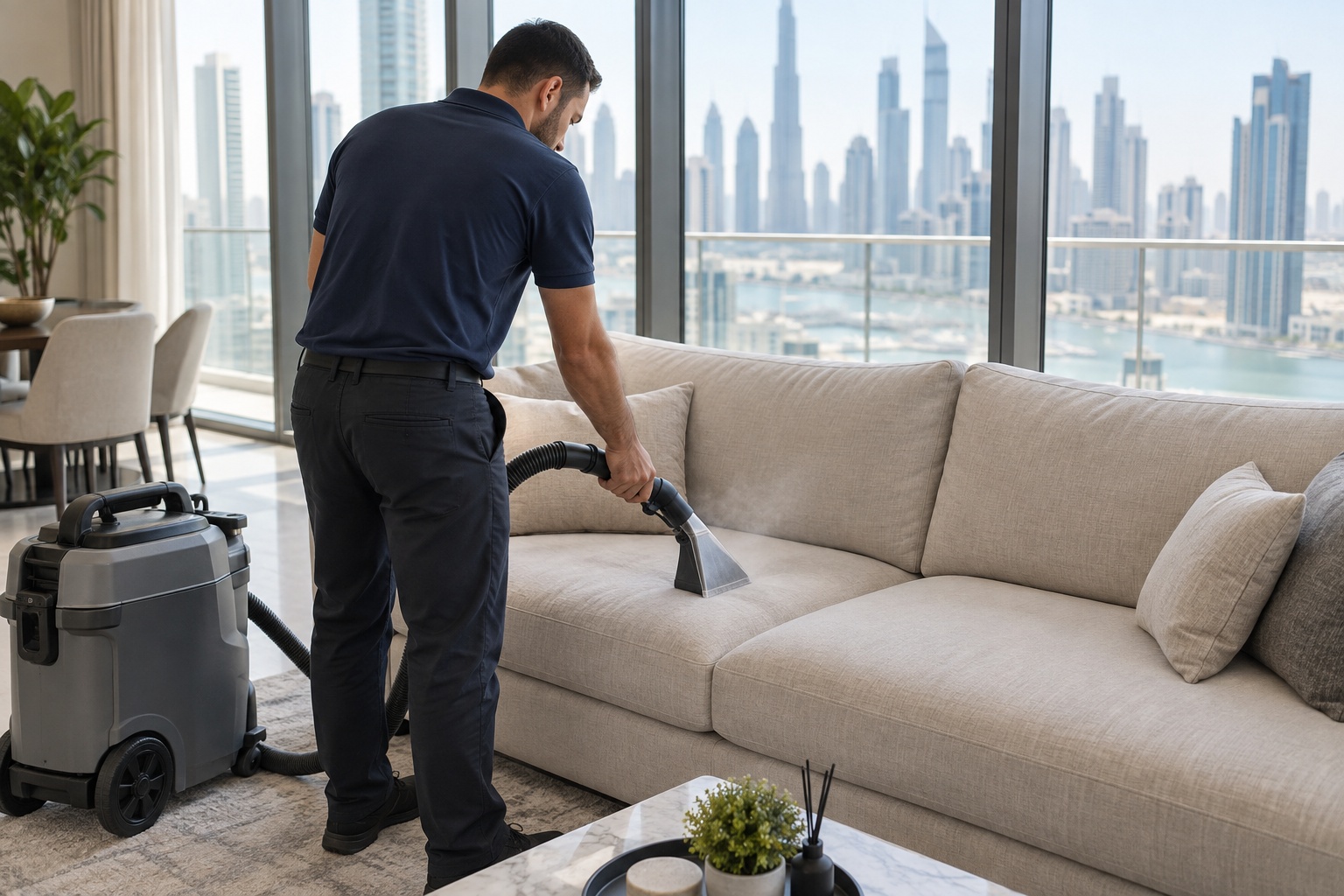
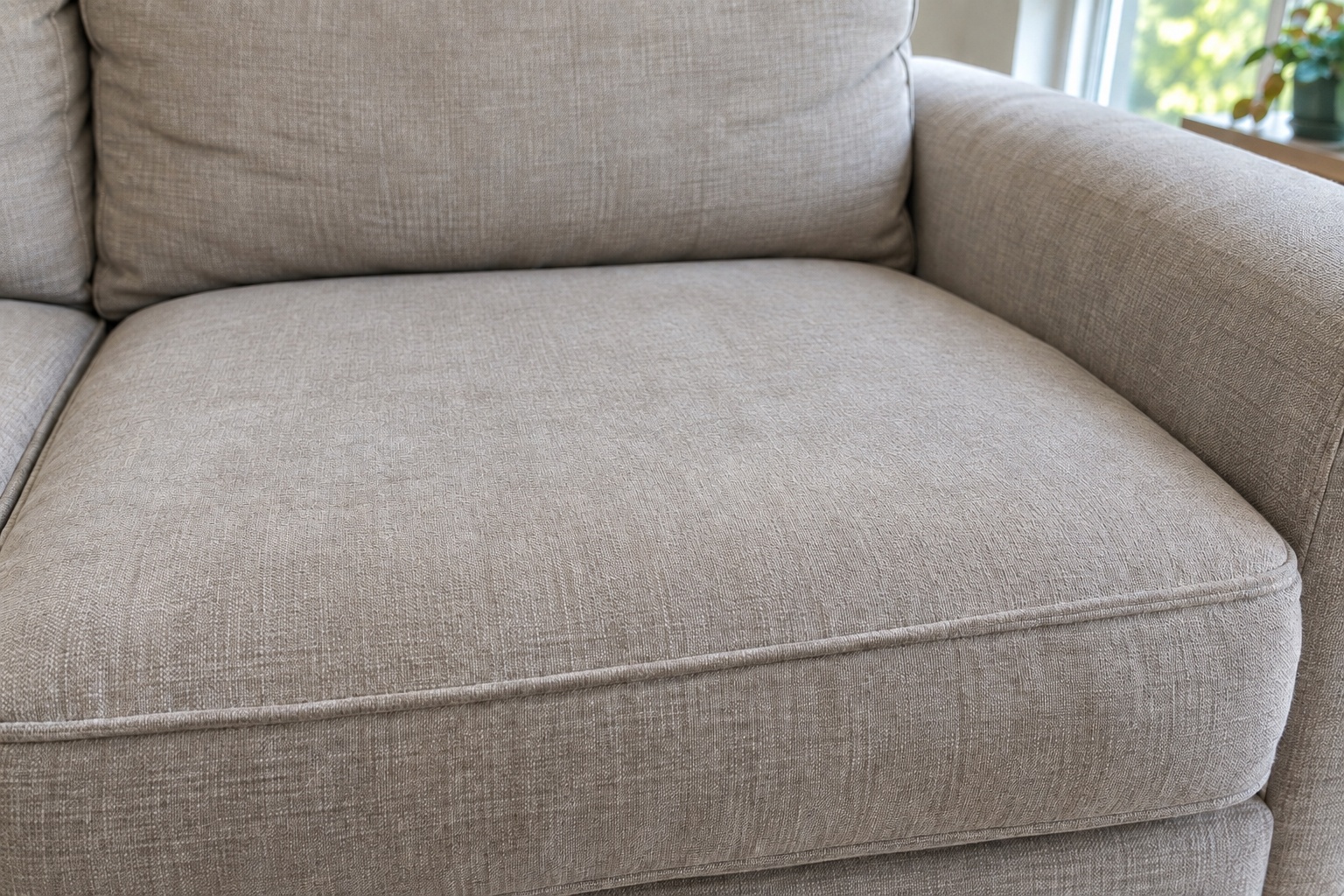
Sofa and upholstery is cleaned by hand-trained technicians using hot water steam extraction to lift embedded dust, dulled fabric and everyday stains from Dubai homes, restoring sofas without soaking the padding or leaving detergent residue behind.
What’s involved in professional sofa cleaning
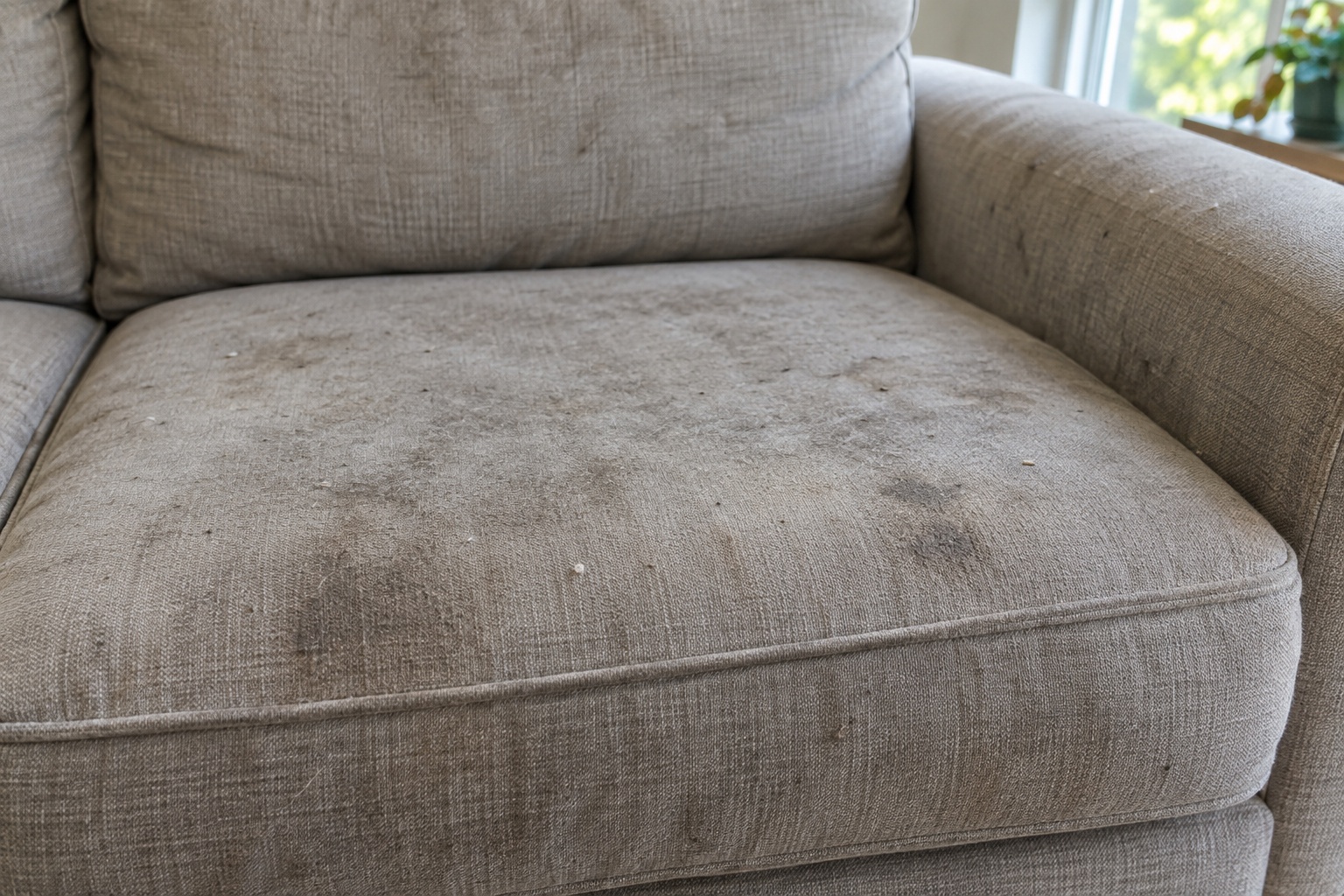
Most sofa cleaning jobs in Dubai homes start with a thorough vacuum pass to lift loose dust and grit out of the seams and crevices, followed by hot water steam extraction across the fabric. The steam loosens embedded dirt and body oils while a wet-vacuum head immediately draws the moisture and dissolved residue back out, so cushions dry faster and don’t stay damp for days in an air-conditioned apartment. Visible stains — coffee, food, ink, pet marks — get a targeted pre-treatment before the main pass, and any deodorizing step happens after the fabric has been rinsed rather than sprayed over dirt.
Fabric type changes the approach. Tightly woven cotton and linen blends handle steam well, while looser weaves or delicate synthetic blends need lower heat and a gentler extraction pass to avoid pilling or watermarking. A quick check of the manufacturer’s cleaning code (if the tag is still attached) helps the technician pick the right solution and heat level before starting.
The cleaning process, step by step
If you have never booked a sofa cleaning service in Dubai before, it helps to know what the technician will actually do once they arrive. A proper job follows the same sequence every time, and skipping any of these steps is usually why a cheap clean looks fine on the day and disappoints a week later.
-
Pre-inspection. The technician looks over the whole sofa first: the fabric type, the care code on the label, the condition of the seams, and every stain you want dealt with. They will ask what caused each stain if you know, because a coffee mark and a grease mark need different treatments. Any loose threads, sun-faded patches or existing watermarks are pointed out at this stage so there are no surprises afterwards.
-
Dry vacuum pass. Before any moisture goes near the fabric, the sofa gets a slow, careful vacuum with a crevice tool along every seam, under the cushions and down the sides of the frame. Dubai apartments collect a surprising amount of fine sand and dust in these gaps. Removing it dry matters because wet grit turns into mud inside the fabric and is far harder to extract.
-
Stain pre-treatment. Visible spots are treated individually with a solution matched to the stain type and left to dwell for a few minutes. This gives the chemistry time to break down the stain so the main pass can lift it rather than simply spreading it.
-
Hot water extraction. A heated cleaning solution is injected into the fabric under controlled pressure and immediately drawn back out along with the loosened dirt, oils and old detergent residue. The technician works in overlapping strokes across every cushion, backrest and arm, adjusting heat and pressure for the material.
-
Final extraction pass. A second pass with clean water and no solution rinses the fabric and pulls out as much remaining moisture as possible. This is the step that shortens drying time and prevents the stiff, crunchy feel that comes from detergent left behind.
-
Deodorising and drying setup. If odour treatment was requested, it is applied now to clean fabric. Cushions are stood on their edges where possible to expose more surface to the air, and the technician will advise on AC and ventilation before leaving.
Fabric types and what changes by material
Not every sofa should be cleaned the same way, and a good sofa cleaning company in Dubai will adjust its method rather than run the same machine over everything. Here is how the common materials differ.
Cotton and linen blends. These are the easiest to work with. Tightly woven natural fibres tolerate hot water extraction well, release dirt readily and dry evenly. The main caution is colour: strongly dyed cottons can bleed if the water is too hot, so the technician tests a hidden area first.
Polyester and durable synthetics. Most modern family sofas are polyester or a polyester-heavy blend. They are stain-resistant, handle steam comfortably and dry quickly. Oily stains cling to synthetic fibres more stubbornly than to cotton, so grease and body-oil marks on armrests often need a dedicated degreasing pre-treatment.
Microfiber. Microfiber looks like suede and is very popular in Dubai apartments because it resists spills. Some microfiber is water-safe and can be extracted normally, but a good proportion carries an “S” care code, meaning it should only be cleaned with a solvent-based or low-moisture method. Water on the wrong microfiber leaves rings and stiff patches. Checking the label before starting is essential.
Velvet. Velvet has a raised pile that crushes and marks easily. It needs lower heat, minimal moisture and strokes that follow the direction of the pile rather than working against it. After cleaning, the pile is gently brushed back up as it dries so the finish stays uniform rather than blotchy.
Leather. Covered in its own section below, because it is not steam-cleaned at all.
Leather sofa cleaning needs a different technique
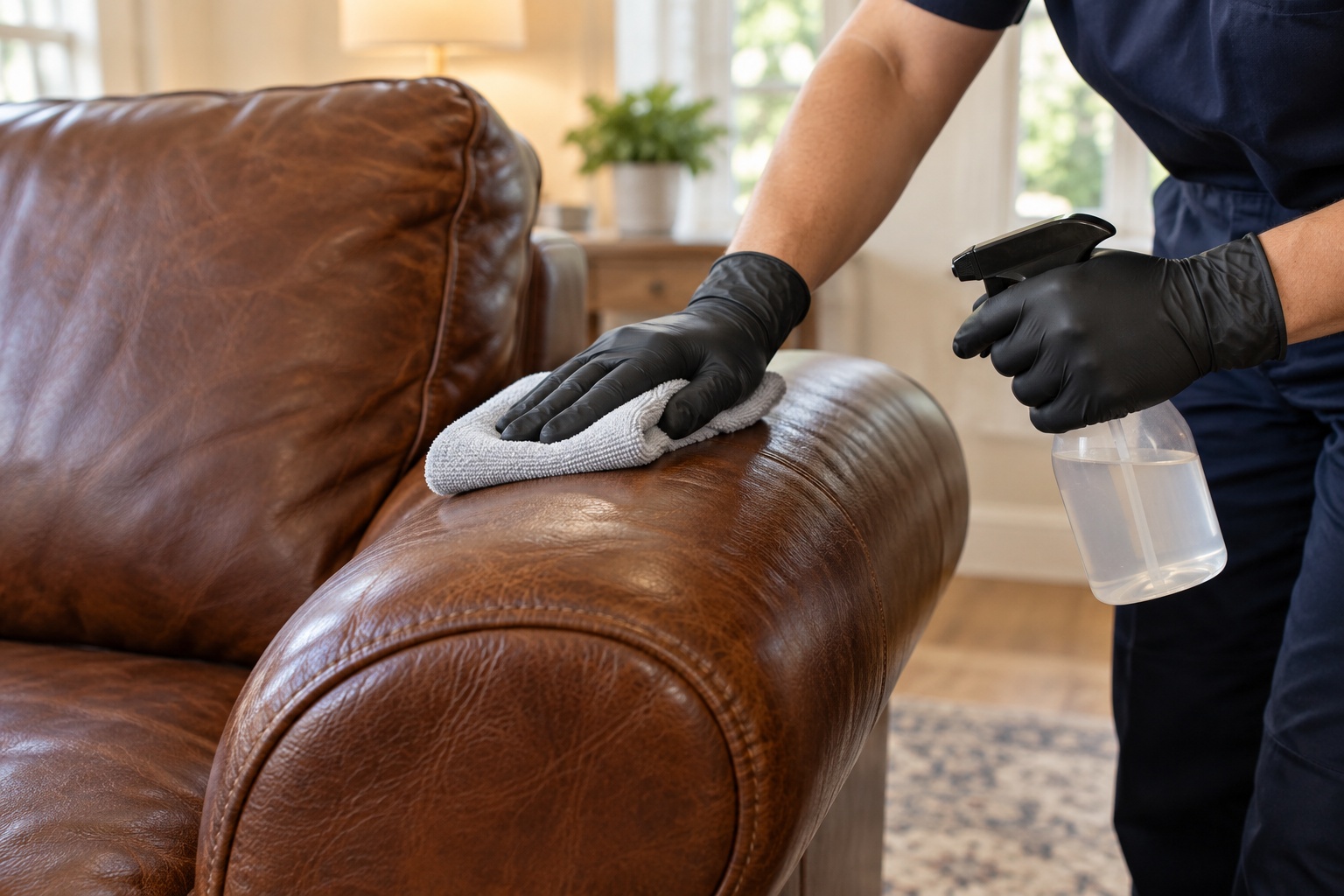
Leather sofas are not steam-cleaned the way fabric ones are — heat and excess moisture can dry out or discolor natural and bonded leather alike. Instead, leather cleaning uses a pH-balanced, leather-safe solution applied with a soft microfiber cloth in gentle circular motions, followed by a conditioning step that replaces oils lost during cleaning and helps prevent cracking. Because leather reacts differently depending on whether it’s aniline, semi-aniline or pigmented, it’s worth mentioning the leather type when booking so the technician brings the right product rather than a generic all-purpose cleaner.
Aniline leather is the most natural and the most absorbent, so it stains easily and must be cleaned with the least moisture. Pigmented leather has a protective top coat and is the most forgiving. Bonded leather, common on cheaper sofas, is a composite that can peel if over-wetted, so it gets the gentlest treatment of all. In Dubai, the bigger long-term threat to leather is dryness: constant air conditioning pulls moisture out of the hide, which is why the conditioning step after cleaning matters as much as the cleaning itself.
Common stains and how they’re actually treated
Stain removal is where technique makes the biggest difference, and it is the reason a quick home scrub often makes things worse. Here is how the stains we see most often in Dubai homes are handled.
Coffee and tea. These are tannin stains, and milky drinks add a protein component too. Tannins respond to a mildly acidic pre-treatment, while protein needs an enzyme-based or alkaline product. A technician will often treat the mark in two stages for this reason. Heat is avoided until the protein is dealt with, since hot water can cook milk residue into the fibres.
Food and grease. Oily marks from takeaway, cooking splashes or hand cream on armrests need a solvent or degreasing pre-treatment to break the oil down before extraction. Rubbing them with water alone just spreads the grease and pushes it deeper.
Ink. Ballpoint and marker ink are among the harder stains. They are treated with a solvent applied to a cloth and blotted, never poured onto the fabric, so the ink is drawn upward instead of outward. Results depend heavily on how long the ink has been there and whether someone has already rubbed it.
Pet urine and odour. Urine leaves both a stain and a smell, and the smell comes back in humid weather if only the surface is cleaned. Enzymatic treatments break down the odour-causing compounds rather than masking them, and the technician will often flush the area more deeply than a normal pass so the padding underneath is addressed too.
Drying time and what affects it
The question we hear most after “how much does it cost” is “when can I sit on it again”. Because the extraction step pulls most of the water back out, a fabric sofa is normally dry to the touch within a few hours and fully usable by the same evening or the following morning. Several things move that window in one direction or the other.
Air conditioning is the biggest factor. Dubai’s cooled indoor air is relatively dry, so a sofa in an air-conditioned room dries faster than it would in most other climates. Leaving the AC running after the clean, rather than switching it off to save power, makes a real difference. Air movement helps as much as temperature, so a ceiling fan or a portable fan aimed at the cushions speeds things up further.
Humidity works the other way. Opening windows to “air out” the room during the summer months lets in humid outdoor air and slows drying down. In winter, when outdoor humidity is lower, ventilation can help. Fabric thickness matters too: thick, deep-filled cushions and loose weaves hold more water than thin, tight synthetics, and heavily stained areas that needed extra flushing will be the last to dry.
How often sofas should be professionally cleaned in Dubai
Dubai is harder on upholstery than many people expect. Fine sand and dust come in through open balcony doors, cling to shoes and clothes, and circulate through AC systems whose filters are cleaned less often than they should be. That dust settles into fabric daily, and over months it dulls colours and works its way into the padding. On top of that, most homes here are air-conditioned year-round, which keeps sofas dry but also means dust never gets rinsed out by the seasonal humidity changes of other climates.
As a practical guide, a household of one or two adults with no pets can usually go around twelve months between professional cleans if the sofa is vacuumed regularly in between. Families with young children, homes with cats or dogs, households where someone smokes indoors, and anyone with allergies or asthma generally benefit from cleaning every six months or so. Light-coloured fabrics show soiling earlier and are often cleaned more frequently for appearance alone.
Between professional visits, a weekly vacuum with an upholstery attachment, rotating and flipping cushions, and blotting spills immediately with a clean cloth rather than rubbing them will keep the sofa in far better condition and make each professional clean more effective.
Indicative pricing
Sofa cleaning typically costs AED 100-350 depending on the size of the sofa (a two-seater costs less than an L-shaped or a five-plus-seater sectional), the fabric type, and how much staining or odor treatment is needed. This is an indicative range rather than a fixed quote — the exact price depends on what the technician sees on-site, so the fastest way to get an accurate number is to send a couple of photos over WhatsApp.
A few things push a quote towards the higher end of that range: delicate fabrics such as velvet or solvent-only microfiber that need a slower, specialist method; heavy pet odour that requires deep enzymatic treatment of the padding; leather that needs cleaning and conditioning; and very large sectionals or multiple pieces. Dining chairs, armchairs, ottomans and mattresses can usually be added to the same visit at a lower per-item rate than booking them separately.
A common combined booking: carpet cleaning
Many Dubai households book sofa cleaning together with a carpet cleaning visit in the same appointment, since both use the same steam extraction equipment and the technician is already on-site. If your living room has both a sofa and a rug or wall-to-wall carpet that need attention, mention it when you book and we can quote both in a single visit.
Frequently asked questions
- How long does it take for a sofa to dry after cleaning?
- Most fabric sofas cleaned with hot water extraction are dry to the touch within a few hours and fully dry by the same evening or the next morning. Thick cushions, loose weaves and rooms with weak AC airflow take longer. Keeping the air conditioning running and, where possible, a fan pointed at the sofa shortens drying noticeably.
- Is steam cleaning safe for all fabric types?
- No. Hot water extraction suits most cotton, linen and durable synthetic blends, but velvet, some microfibers, silk and loosely woven or vintage fabrics need lower heat, less moisture or a low-moisture alternative. The technician checks the fabric and its care code before choosing a method, and will test an inconspicuous spot first if there is any doubt.
- How often should sofas be professionally cleaned in Dubai?
- For a typical household, a professional clean every 6 to 12 months keeps fabric in good condition. Homes with pets, young children, smokers or frequent open-window ventilation that lets in sand and dust usually benefit from cleaning closer to every 6 months. Light-coloured sofas also show soiling sooner and tend to need attention more often.
- Can you remove old or set-in stains?
- Often, but not always. Fresh stains respond well to targeted pre-treatment and extraction. Older stains that have been heat-set by sunlight or a home hair dryer, or that were scrubbed with the wrong product, can be permanently bonded to the fibres. We will always try the appropriate treatment and tell you honestly beforehand if a stain is likely to lighten rather than disappear.
- Do you clean leather sofas too?
- Yes. Leather is cleaned with a pH-balanced leather-safe solution and a soft cloth rather than steam, then conditioned to restore oils and help prevent cracking. Let us know whether your sofa is aniline, semi-aniline or pigmented leather when booking so the technician brings the right products.
- Can I book sofa and carpet cleaning together?
- Yes, and it is one of our most common bookings. Sofa and carpet cleaning use the same extraction equipment, so combining them in one visit saves a second call-out and is usually cheaper than booking them separately. Mention both when you message us and we will quote them as a single job.
Areas we cover for this service
Area pages with building-type notes, local pricing and availability for that community.