
Bed Bug Treatment in Dubai
Bed bug treatment in Dubai starts with confirming that bed bugs are really the problem, because bites alone do not prove it. Once confirmed, the bugs and their eggs must be treated in the mattress, bed frame and nearby furniture, and a follow-up visit is normally planned. Send photos on WhatsApp and we arrange an independent partner technician for inspection.

On this page
- Confirm it before you treat it
- Why bed bugs are treated differently
- What treatment involves
- Travel, second-hand furniture and how it starts
- Prepare before the visit
- Mattress, sofa and upholstery after treatment
- Apartment and villa considerations
- What affects the quote
- When you do not need bed bug treatment
- What is not included
- Send photos for a quote
Confirm it before you treat it
Bed bug treatment in Dubai is a bigger job than most other home-pest work, and the common mistake is acting on bites alone. Red itchy marks in a line on your arm are a classic bed bug story, but mosquitoes, fleas and skin reactions can look identical. The only proof is the bugs.
What to look for:
- Live bugs. Adults are small, flat and oval, about the size of an apple seed, reddish-brown, and are most active at night.
- Shed skins. Pale brown, translucent husks left as young bugs grow.
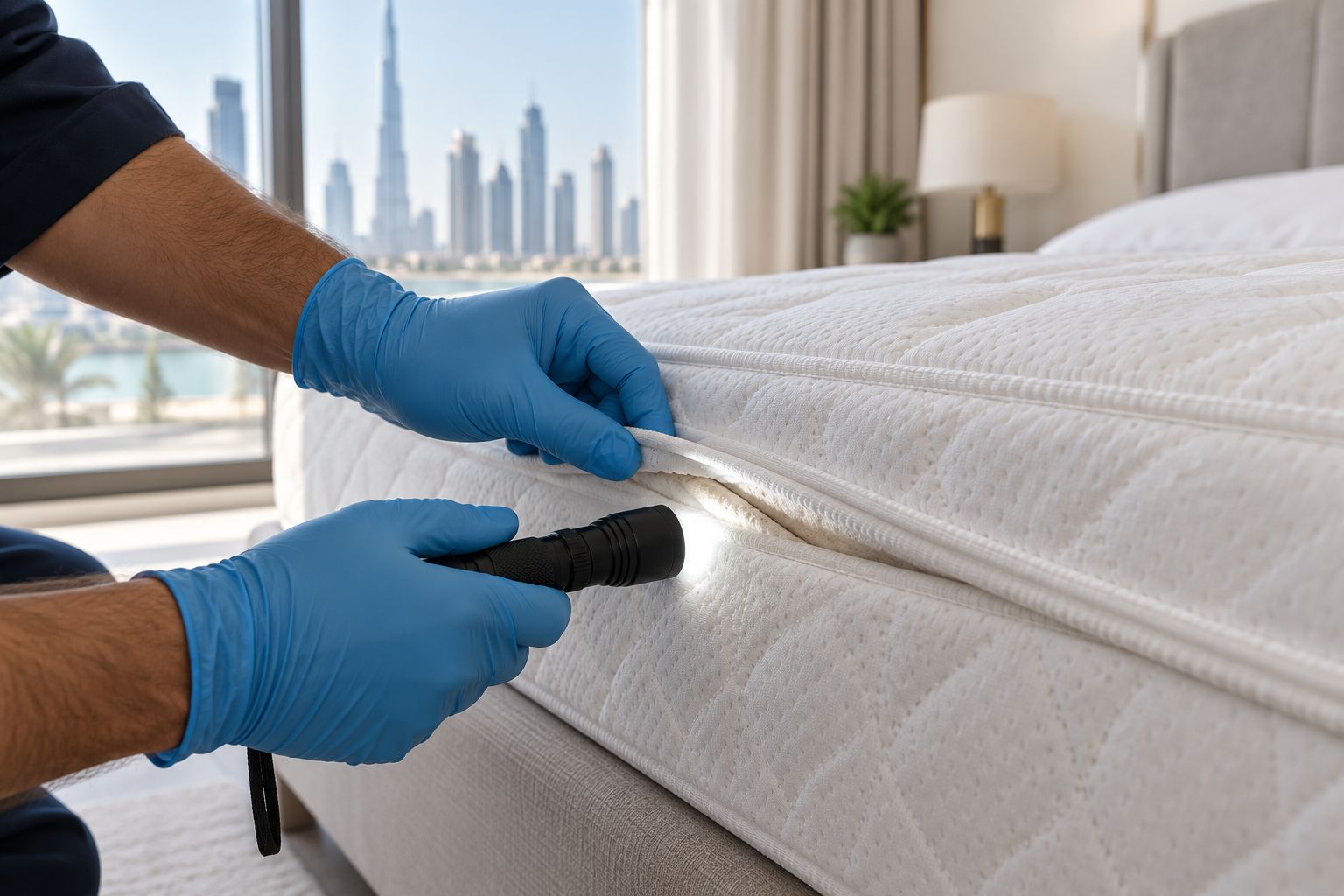
- Dark spots. Tiny ink-like dots on the seams of the mattress, the piping, and the headboard, which are the bugs’ droppings.
- Eggs. Small white grains in seams and crevices, much harder to spot.
- Spots of blood on sheets. Small marks, usually from crushed bugs.
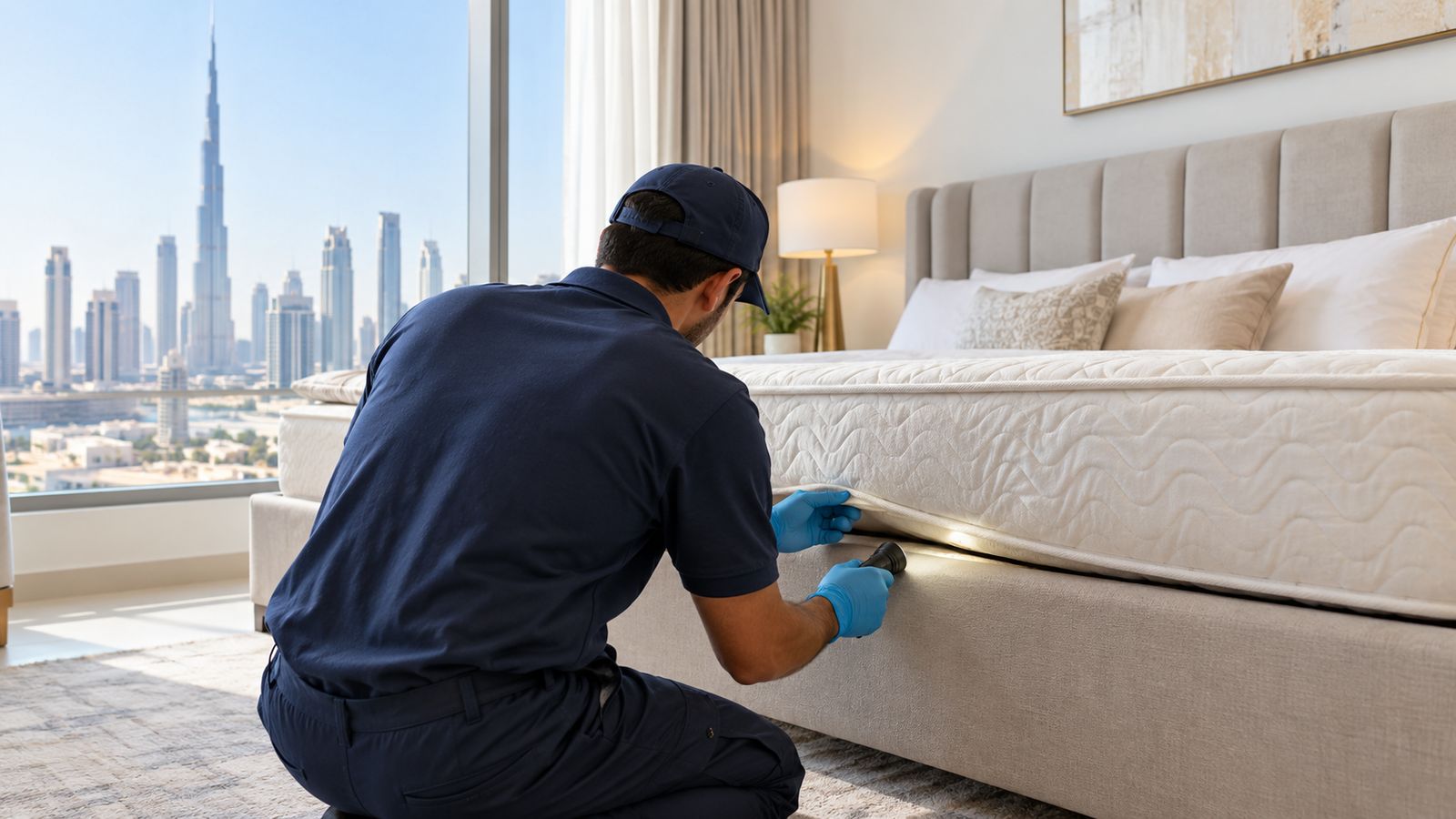
The most useful photo is of the mattress seam under good light. Check the sides of the mattress, the box spring if you have one, the bed frame joints and the headboard, and the wall behind it. If you find anything, send the photo before cleaning or moving things around. Our wider overview of what else turns up in homes is on the pest control in Dubai page.
Why bed bugs are treated differently
Cockroaches and ants move around your kitchen looking for food. Bed bugs live where you sleep, hide in tiny gaps within a couple of metres of the bed, and come out at night to feed. That has three consequences.
- The treatment area is the bedroom, not just the bed. Mattress seams, bed frame, headboard, skirting boards, behind wall sockets and pictures, curtains, nearby sofas and bags.
- Eggs are the hard part. Adults are relatively easy to kill; eggs resist many treatments, which is why follow-up matters.
- Moving things spreads them. Taking the mattress to the corridor, sleeping on the sofa or carrying bedding through the flat can move bugs into rooms that were clean.
What treatment involves
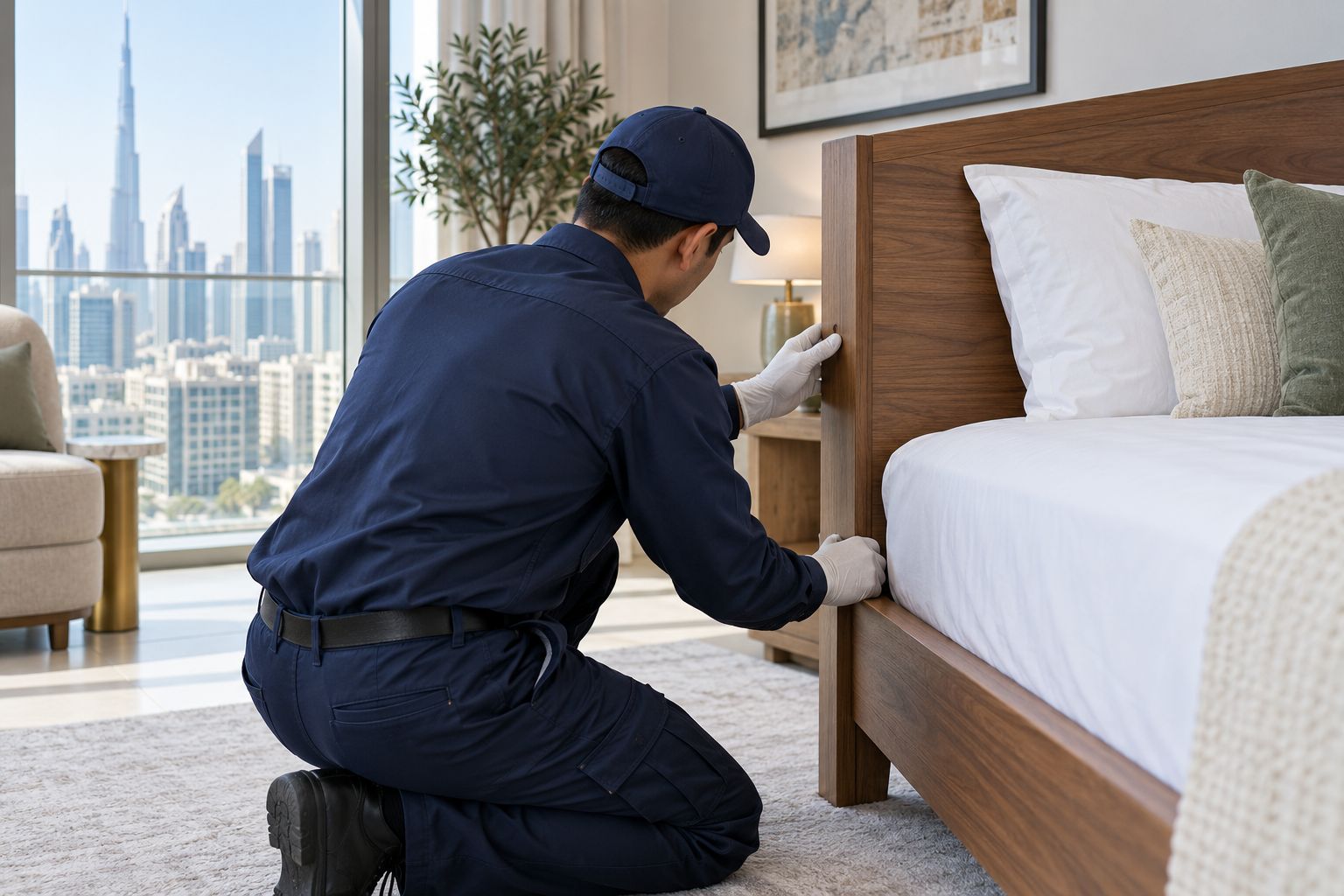
- Inspection. The technician checks the mattress, frame, headboard, nearby furniture and the walls around the bed, then confirms whether bed bugs are present and how far they have spread.
- Method chosen. This may be a chemical treatment of seams, frames and cracks, a heat treatment, steam or a combination. The choice depends on the extent of the problem, the type of furniture and who lives in the home. Ask what will be used and why.
- Treatment. Applied to the mattress, bed frame, skirting boards and furniture around the bed. The technician tells you what to move or remove beforehand.
- Re-entry and airing. You are told when you can use the room, how long to ventilate and what not to wipe.
- Follow-up visit. A second visit, often around two weeks later, re-inspects and re-treats if there are signs of activity. Complete the follow-up even if you stop seeing bugs; a quiet week is not proof of success.
Heat is a respected method because it reaches hidden bugs and eggs, but it needs the whole area to reach and hold the right temperature, which is not always practical in every flat. Do not assume either method is better; ask the technician what is suited to your room.
Travel, second-hand furniture and how it starts
Most home infestations trace back to something carried in. Luggage after a trip is the classic route; a second-hand mattress, bed frame or sofa bought through a classifieds listing is another; so is laundry shared with an infested home, or a stay with relatives. In Dubai, where many residents travel often and furnished flats change tenants regularly, the practical habits are simple: inspect the seams of any used furniture before it comes inside, unpack luggage in a bathroom or on a hard floor rather than on the bed, and wash and heat-dry travel clothes soon after returning.
None of this means a home is dirty. Bed bugs follow people, and a spotless flat is as likely to get them as a cluttered one. Clutter only matters because it gives them more places to hide, which makes inspection and treatment harder.
Prepare before the visit
Do what the technician asks, but a general plan is:
- Strip the bed, bag the linen without shaking it, and wash it at the hottest setting the fabric allows, then tumble dry on high. Keep it sealed afterwards.
- Do the same with curtains, soft toys and clothes stored near the bed.
- Empty drawers and bedside tables within reach of the bed; bag the contents.
- Clear the floor around the bed so the technician can reach skirting boards and furniture.
- Do not move furniture to other rooms or buy new bedding yet.
- Keep children and pets out of the room until the technician says it is safe.
A full checklist covering other pests is in our guide on how to prepare for a pest control treatment in Dubai. If the bedroom has accumulated items that give bugs hiding places, junk removal can clear them first.
Mattress, sofa and upholstery after treatment
Mattresses are usually treated, not thrown out. Once the technician has treated and the follow-up is clear, a deep clean is useful for removing the dead bugs, shed skins and droppings: mattress cleaning and sofa cleaning are the services for that. Do the cleaning after treatment, not before. Cleaning is not a substitute for treatment, and doing it first can move the bugs.
Encasing the mattress and box spring in a zipped, bed-bug-rated cover for a period after treatment is a common precaution, since it traps anything left and makes new activity easier to spot.
Apartment and villa considerations
Apartments. Bed bugs can move between units along shared walls, pipe gaps and cable routes. If the neighbouring unit is infested, you can be re-infested. Telling building management can help, and a treatment plan for adjoining units is better than treating one alone. Check building rules for working hours and technician access.
Villas. The same biology applies, but more bedrooms means more rooms to inspect. The quote reflects how many rooms need treatment.
Shared accommodation and rentals. Bed bugs spread easily where laundry, mattresses and furniture are shared. If you rent, photograph the evidence and tell the landlord or agent in writing; the tenancy contract usually determines who pays, so check it.
What affects the quote
- Number of rooms and beds to inspect and treat.
- Severity and spread: one mattress, or several rooms.
- Method: chemical, heat, or a combination.
- Number of visits including the follow-up.
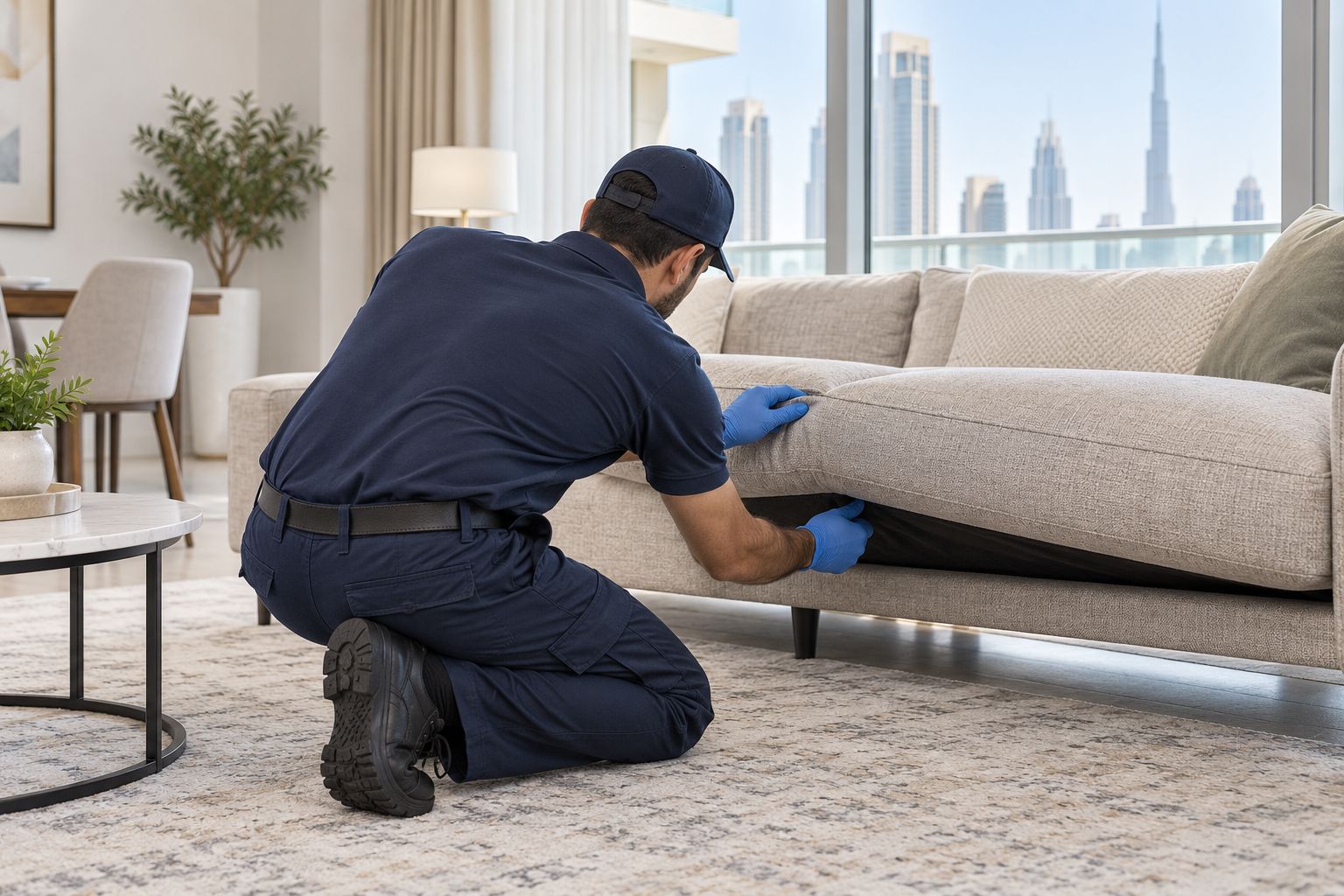
- Furniture that needs treating, such as sofas and wardrobes.
We quote after you send photos and room details. For comparing quotes, see our guide to pest control prices in Dubai.
When you do not need bed bug treatment
- You have bites but no bugs, shed skins or dark spots anywhere on the bed after a careful look. Consider mosquitoes, fleas or skin reactions and send photos before booking.
- You found a single insect that turns out to be another pest. Cockroaches, for example, are a different job; see cockroach control in Dubai.
If you are unsure, send photos. Confirmation costs nothing and prevents unnecessary treatment.
What is not included
Treatment does not replace a mattress, repair the bed frame or deal with an infestation next door. Laundering, cleaning and disposal of items are separate. It also cannot guarantee that bugs will not return if you travel and bring them home again. For sealing gaps and repairs in a villa, villa maintenance can help.
Send photos for a quote
Message us on WhatsApp with photos of the mattress seams, any bugs or spots you found, your area and the number of bedrooms. An independent partner technician inspects first, and you agree the method, visits and follow-up before treatment starts.
Frequently asked questions
- How do I know if I have bed bugs and not mosquito bites?
- Bites cannot tell you, since many insects and skin conditions look similar. Look for the bugs themselves: small flat oval insects, shed skins, tiny white eggs, or dark spots like pen dots along mattress seams, the headboard and bed frame joints. Send photos of any marks and any insect you find so the technician can confirm before treatment starts.
- Can I get rid of bed bugs with spray or a mattress cleaning?
- Usually not on its own. Bed bugs hide in seams, frames, skirting boards and furniture, and eggs are hard to reach. Shop sprays kill what they touch and can drive bugs into other rooms. Cleaning a mattress may remove dirt but is not a bed bug treatment, so confirm the infestation and treat it before cleaning.
- How many treatments does bed bug control need?
- Bed bug problems commonly need more than one visit because eggs can survive the first treatment and hatch afterwards. A follow-up is typically planned around two weeks later, though the right timing depends on the method used. Ask what visits are planned and what they cost before agreeing, and expect the technician to re-inspect.
- Do I need to throw away my mattress?
- Often no. A mattress can usually be treated rather than thrown away, and throwing it out without treatment can spread bugs through the building while the rest of the room stays infested. If a mattress is badly damaged, the technician may advise replacing it, but treat the room first so the new one is not infested.
- How should I wash bedding before treatment?
- Strip the bed, seal linen and clothes in bags without shaking them, and wash at the hottest temperature the fabric allows, then dry on a high heat setting. Heat from the dryer is what kills bugs and eggs. Keep the clean items bagged until treatment is finished so they do not get re-infested.
- Where do bed bugs come from in Dubai?
- Typically they are brought in on luggage, second-hand furniture, shared laundry or clothing after travel, hotels or visits to infested places. In a high-rise they can also spread between neighbouring units through gaps and shared walls. Being found does not mean the home is dirty; bed bugs are attracted to people, not mess.
- How long before I can sleep in the bed again?
- That depends on the method and product. Some treatments allow the room to be used again after a few hours of airing, others need longer. Follow the technician's re-entry advice exactly, keep using protective mattress covers if recommended and keep monitoring for several weeks after treatment.
Related services
Jobs people often book alongside this one.
Related guides
Straight answers to the questions people ask before booking this service.