
Office Cleaning Checklist for Dubai Offices and Small Commercial Units
Quick answer
A good office cleaning checklist for Dubai splits tasks by area and by how often they are done. Daily or per visit: bins, desks and shared surfaces, washrooms, pantry, entrance and floors. Weekly: glass, doors, skirting and high-touch points in more detail. Periodically: carpets, upholstered chairs, window tracks and AC vents. Write the list down and agree it with the cleaning provider before the first visit.
On this page
- What does an office cleaning checklist need to do?
- How to read this checklist
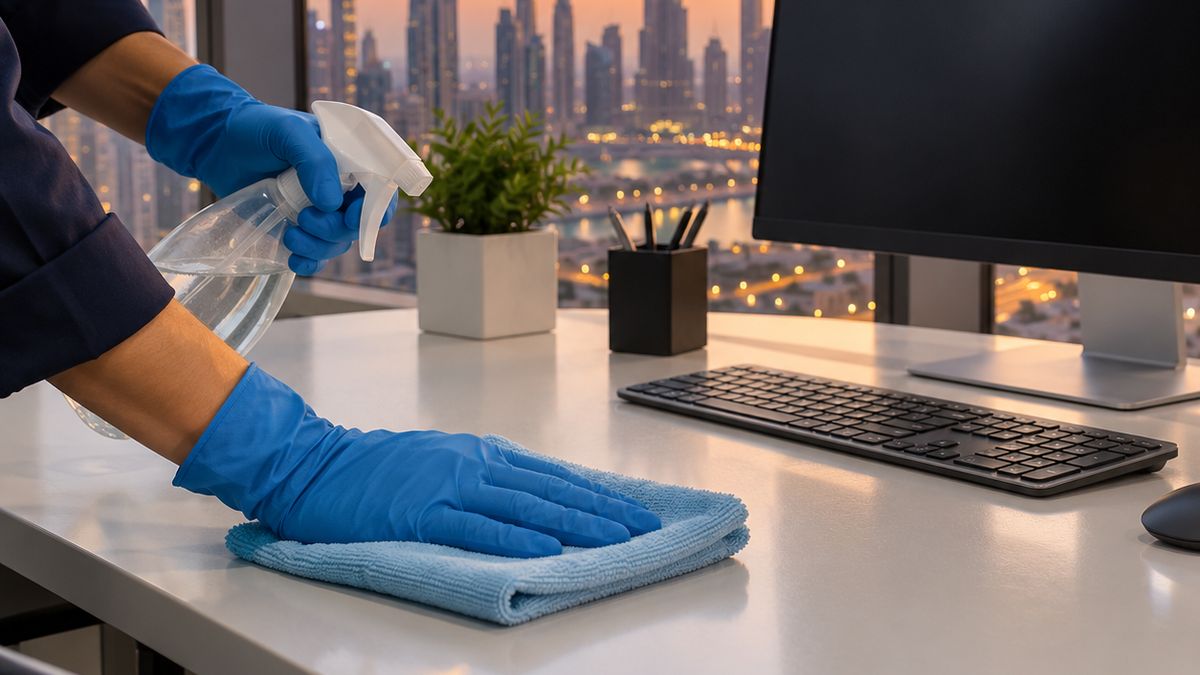
- Workstations and open-plan areas
- Meeting rooms
- Washrooms
- Pantry and kitchenette
- Entrance, reception and corridors
- Glass, doors and fittings
- Floors and carpets
- Air and ventilation
- Dubai-specific items worth adding
- Sign-off at the end of each visit
- What should not be on the cleaning checklist
- Turning the checklist into a written scope
- Common checklist mistakes
- Before the first visit
What does an office cleaning checklist need to do?
A checklist is useful only if it turns “keep the office clean” into specific tasks with a stated frequency. Without that, two people can read the same arrangement differently: one expects the pantry fridge wiped weekly, the other assumes it is never touched. A written list protects both sides and makes quotes comparable.
This guide gives you a working checklist for offices and small commercial units in Dubai, such as business-centre suites, serviced offices, studios and showrooms, arranged by area and by frequency. It is a starting point, not a standard. Premises differ, so edit it to fit yours. If you want to know how often the whole routine should happen, our separate guide on how often an office should be cleaned in Dubai covers scheduling. This page is about what goes on the list.
How to read this checklist
Tasks are grouped into three bands:
- Every visit: the baseline that keeps the office usable.
- Weekly or fortnightly: detail work that does not need doing every time.
- Periodic: deeper jobs, usually booked separately.
Which tasks fall into which band depends on your headcount, footfall and how food is handled. Treat the bands as a template and move items up or down.
Workstations and open-plan areas
Every visit
- Empty bins and replace liners, including recycling.
- Wipe cleared desk surfaces and shared tables. Staff should lift laptops and papers, since cleaners should not move them.
- Dust accessible flat surfaces: window ledges, shelves, monitor stands.
- Tidy chairs back under desks.
- Vacuum carpet or mop hard floor.
Weekly
- Wipe phones, keyboards and mice on the outside, where agreed.
- Wipe desk edges, drawer fronts and filing cabinet tops.
- Spot-clean marks on chair arms and backs.
- Dust skirting boards and the lower edges of partitions.
Periodic
- Clean the tops of cabinets and high shelves.
- Clean the undersides and wheels of chairs.
- Clean upholstered chairs, see sofa cleaning for how fabric cleaning works.
Meeting rooms
Every visit
- Wipe the table and the arms of chairs.
- Empty bins and clear used cups if that is agreed.
- Vacuum or mop.
Weekly
- Wipe glass walls and door handles.
- Wipe the surfaces of screens and control panels with a suitable cloth, only where you have said it is acceptable.
- Check for marks on walls and chairs.
Meeting rooms are the first thing clients see, so some offices add a quick check before important visits instead of a heavier regular scope.
Washrooms
Washrooms decide how clean the office feels, so they have the longest checklist.
Every visit
- Clean and disinfect toilets, urinals and basins.
- Clean taps and mirrors.
- Empty bins and sanitary waste.
- Restock soap, towels and toilet paper if the office supplies them.
- Mop the floor.
Weekly
- Descale taps, basins and shower areas if present. Dubai’s hard water leaves limescale that daily wiping does not remove.
- Wipe walls, partitions and the backs of doors.
- Clean extractor fan covers and vents.
Periodic
- Clean grout lines and sealant.
- Deep-clean floors and drains.
Report leaks, slow drains or bad smells instead of cleaning around them. If the cause is a plumbing fault, a plumbing visit is the next step, not extra scrubbing.
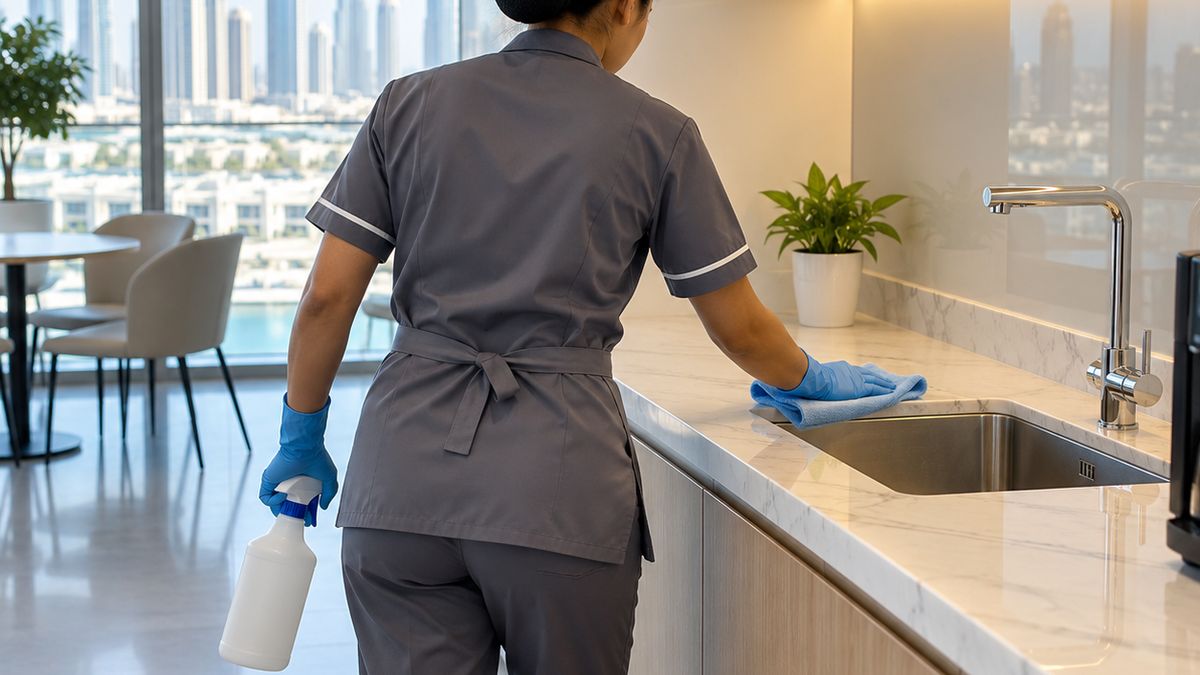
Pantry and kitchenette
Food is what separates a low-maintenance office from a high-maintenance one.
Every visit
- Wipe counters, sink and taps.
- Empty bins and replace liners.
- Wipe the outside of the fridge, microwave and coffee machine.
- Clear and rinse any dishes left in the sink if you have agreed that.
- Mop the floor.
Weekly
- Clean inside the microwave.
- Wipe cabinet fronts and handles.
- Clear out expired food from the fridge. This is best done by staff, since the cleaner does not know what belongs to whom.
Periodic
- Defrost and clean the inside of the fridge.
- Descale the kettle and coffee machine as the manufacturer advises.
- Degrease the tiles behind the counter.
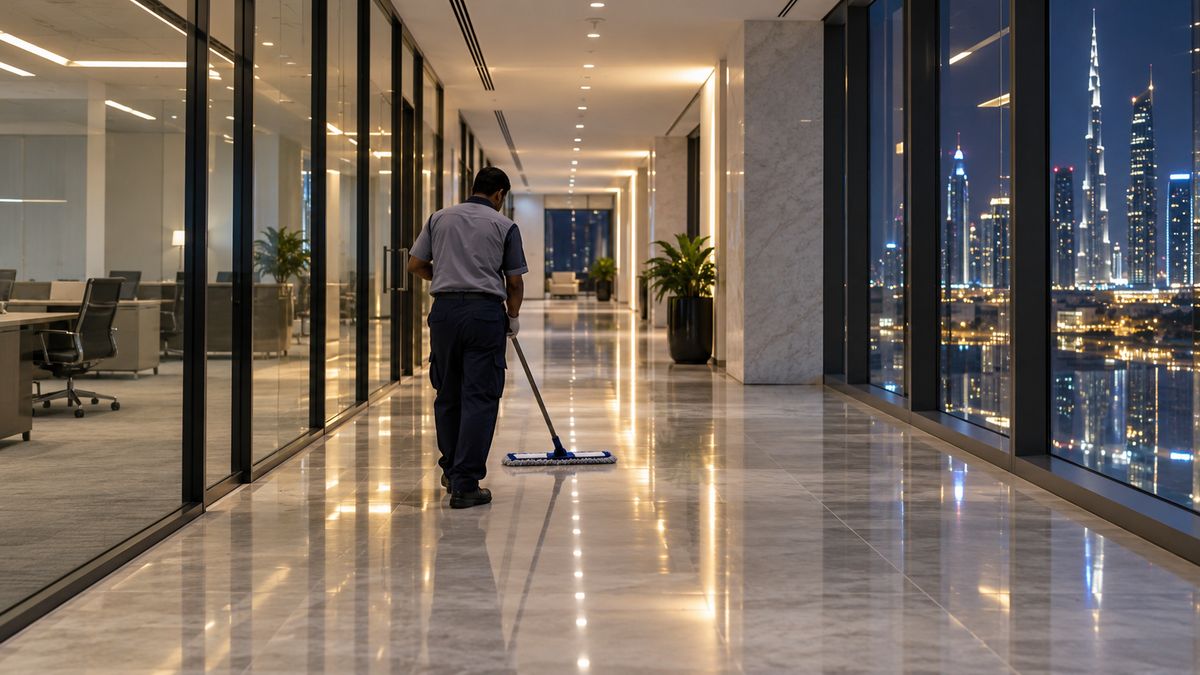
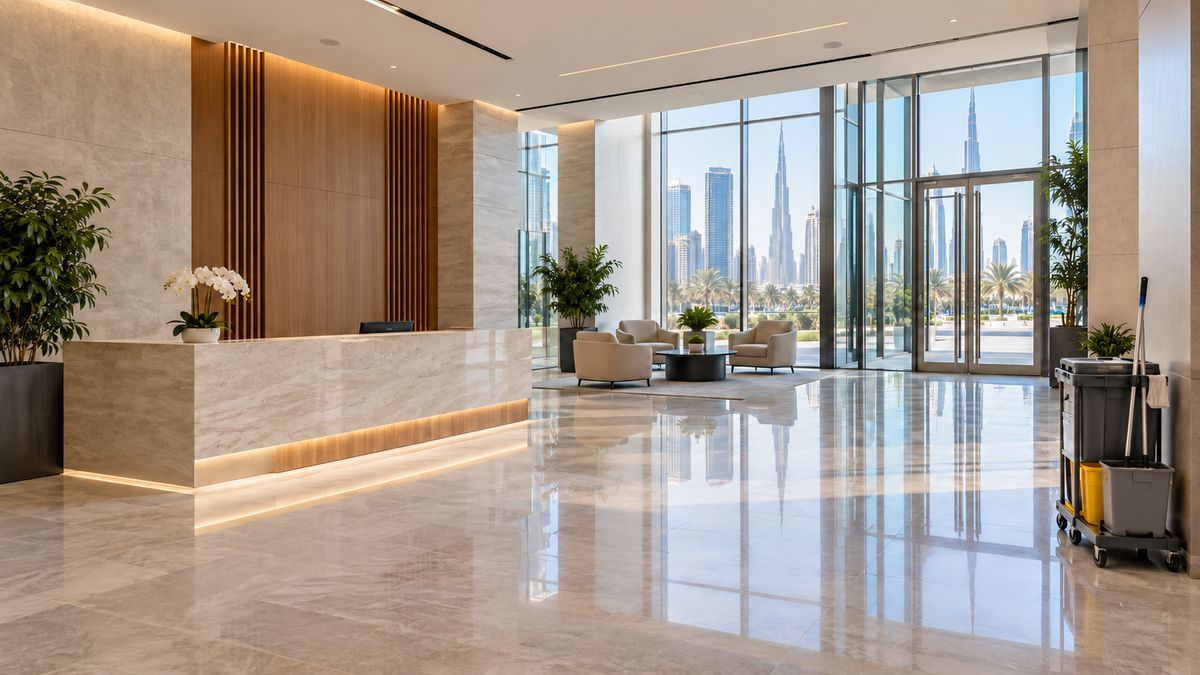
Entrance, reception and corridors
Every visit
- Vacuum or mop entrance floors and mats.
- Wipe the reception desk and visitor seating.
- Wipe door handles, push plates and lift buttons within the unit.
- Empty bins.
Weekly
- Clean glass doors and entrance glass, inside faces.
- Dust corridor skirting and door frames.
- Spot-clean marks from walls near switches and handles.
In Dubai, fine dust comes in through doors and ventilation and shows first on entrance floors and flat surfaces, so the entrance often needs more attention than its size suggests.
Glass, doors and fittings
Weekly
- Clean interior glass partitions and doors, including fingerprint marks at hand height.
- Wipe door handles and light switches.
Periodic
- Clean window glass, frames and tracks on the inside.
- Exterior glass only where it can be reached safely and the building allows it. In towers, façade cleaning is normally managed by the building, so do not put it on your checklist.
Floors and carpets
Every visit
- Vacuum carpets and mop hard floors, finishing the room last so nothing is walked back over.
Periodic
- Deep clean carpets by extraction. This is best done out of hours so the carpet can dry before staff return. Our carpet cleaning page explains how it works, and the guide on how long carpet takes to dry in Dubai helps you plan the timing.
- Machine-scrub or polish hard floors if the surface needs it.
Air and ventilation
Vents and grilles collect dust that returns to the room. Wipe accessible grilles as part of the weekly or periodic list. If the supply air smells stale, dust is visibly blowing out of the vents, or you have had a fit-out nearby, the ducts themselves may be the cause, and AC duct cleaning is a separate job from surface cleaning. Our guide to when AC ducts need cleaning explains the signs. In many commercial units the landlord or building manages the main AC system, so check who is responsible before booking.
Dubai-specific items worth adding
A generic checklist written for another city will miss a few things that matter here.
- Entrance mats and the first few metres of floor. Sand and dust come in on shoes and through doors, so mats need shaking or vacuuming, and entrance tiles need more frequent mopping than the rest of the floor.
- Sliding door and window tracks. Sand collects in tracks and stops sliding doors closing properly. Add them to the weekly or periodic list.
- Limescale. Hard water marks glass, taps and basins. A line for descaling stops washrooms and pantry taps looking dull.
- Glass. Bright offices show fingerprints and dust on partitions quickly, so glass belongs on the weekly list at least.
- After works. If there has been a fit-out or construction nearby, add a one-off detailed dust clean of surfaces, vents and tracks, and tell the provider so it is scoped as a heavier job.
Sign-off at the end of each visit
A short sign-off helps the list stay alive. Ask the cleaner, or your office contact, to confirm three things after each visit: the agreed areas were done, anything unusual was reported (a spill, damage, a leak, a missing item), and the unit was locked or handed back as agreed. A line in a shared message thread is enough. It creates a record that makes the first conversation about a missed task far easier.
What should not be on the cleaning checklist
Keeping some things off the list avoids disappointment and risk:
- Cleaning inside IT equipment, servers or specialist machinery.
- Sorting, moving or filing paperwork.
- Medical, laboratory or industrial cleaning that needs special procedures.
- Repairs, re-grouting or paint touch-ups.
- Anything the building manages, such as common corridors, lifts and façades.
Describe unusual features in your first message, for example a commercial kitchen, a treatment room or a server cupboard, so the scope is realistic.
Turning the checklist into a written scope
A checklist becomes a scope when each line has an owner and a frequency. Before the first visit:
- List the areas and approximate floor area, number of washrooms and pantries.
- Mark each task as every visit, weekly or periodic.
- State who supplies equipment, products and consumables.
- Confirm access: who unlocks, who holds keys or cards, what the building requires for contractor passes and working hours.
- Name one contact on your side who the cleaner reports spills, damage or missing items to.
- Agree what happens if a visit is missed or a task is not done.
Independent partners do the cleaning, and Dubai Service Hub coordinates the booking. The scope and anything that affects the price are confirmed in the quote on WhatsApp before anything starts. Our office cleaning page lists what a typical regular visit covers and what usually affects the quote.
Common checklist mistakes
- Writing “clean the office” without detail, which leaves everything open to interpretation.
- Forgetting washroom restocking, which then falls between the cleaner and the office manager.
- Putting deep tasks on every visit, which inflates the quote for work that is needed monthly or quarterly at most.
- Ignoring the entrance, where dust and sand show first.
- Leaving desks cluttered, so cleaners wipe around piles of paper. A clear-desk habit helps more than an extra visit.
- Not reviewing the list. After a refit, a headcount change or a move into a new unit, the list needs to change too.
Before the first visit
Clear confidential papers and lock sensitive cabinets. Remove personal items and cash from desks. Make sure building management knows the cleaning team is coming, and confirm the entry arrangements. Then walk the office the next morning and compare it with the list. Note gaps, send them to the provider, and adjust the scope. A few visits are usually enough to settle a checklist that works for your office.
Frequently asked questions
- What should an office cleaning checklist include?
- At minimum: bins and liners, desks and shared tables, meeting rooms, washrooms, pantry, floors, entrance and reception, glass and doors. Add a separate section for periodic jobs such as carpets, upholstered chairs, window tracks and AC vents. Each line should say how often it is done, so nothing depends on guesswork.
- What is the difference between daily and deep cleaning in an office?
- A daily or per-visit clean keeps surfaces, floors, washrooms and the pantry in usable condition. A deep clean goes into what the routine does not reach: carpet extraction, upholstery, window tracks, the tops of cabinets, vents and grout. Deep tasks are usually booked as separate, periodic jobs and quoted on their own.
- Who should clean computers, keyboards and phones?
- Cleaners can wipe the outside surfaces of desks, phones and keyboards, but they should not open equipment, move paperwork or clean inside IT hardware. If your office handles confidential material, clear desks and lock cabinets before the visit. Anything beyond surface wiping should be agreed in writing first.
- Do I need a different checklist for a clinic admin area, showroom or coworking space?
- Yes, the emphasis changes. A showroom puts more weight on entrance floors and glass, a coworking floor on washrooms and shared kitchens, and a clinic admin area on waiting seats and washrooms. Clinical or treatment-room cleaning is a different specialism and should not be assumed to be covered by a standard office checklist.
- How do I use a checklist when asking for a cleaning quote?
- Send the list with your floor area, number of washrooms, whether the floor is carpet or hard surface, and your preferred visit window. Ask the provider to confirm line by line what is included, what is excluded and what is periodic. Quotes are easier to compare when every provider prices the same checklist.
- Should the checklist cover consumables like soap and tissue?
- Yes, add a line saying who supplies and restocks hand soap, towels, toilet paper and bin liners. In many offices the company supplies consumables and the cleaner restocks them, but arrangements differ, so confirm it in the quote instead of assuming.
- How do I check that the checklist is actually being followed?
- Nominate one person on your side to walk the office the next morning for the first few visits, and note anything missed against the list. Raise gaps with the provider quickly and in writing. A short trial period at the start gives you a fair chance to adjust the scope before settling into a routine.
Read next
Related services
Need this sorted rather than researched?
Send a WhatsApp message with what you are seeing and we will come back with a quote.