
Painting Services in Dubai for Apartments & Villas
Painting services in Dubai cover everything from a single repainted bedroom to a full villa exterior, and the quote depends mostly on prep, not paint. Send photos and the unit size on WhatsApp and we coordinate an independent partner painter, with the scope, finish and what is excluded written down before work starts.
On this page
- What painting services in Dubai actually involve
- Apartment vs villa: how the job differs
- Move-out repaint and tenancy handover
- Colour, finish and surface prep
- Dubai conditions: humidity, dust and sun
- What affects the quote
- Drying, ventilation and getting back in
- What is NOT included, and when you do not need painting
- What to send on WhatsApp
What painting services in Dubai actually involve
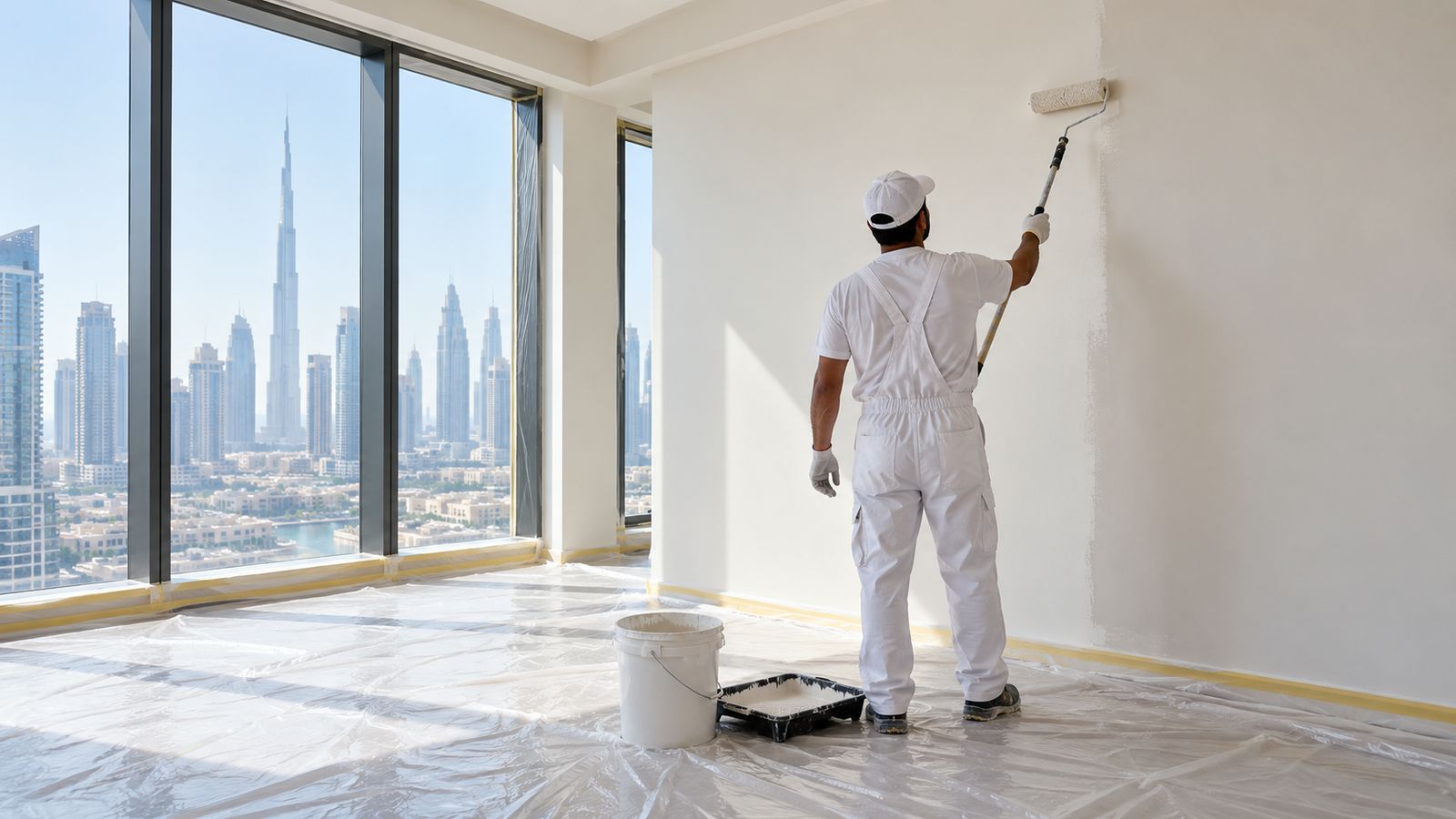
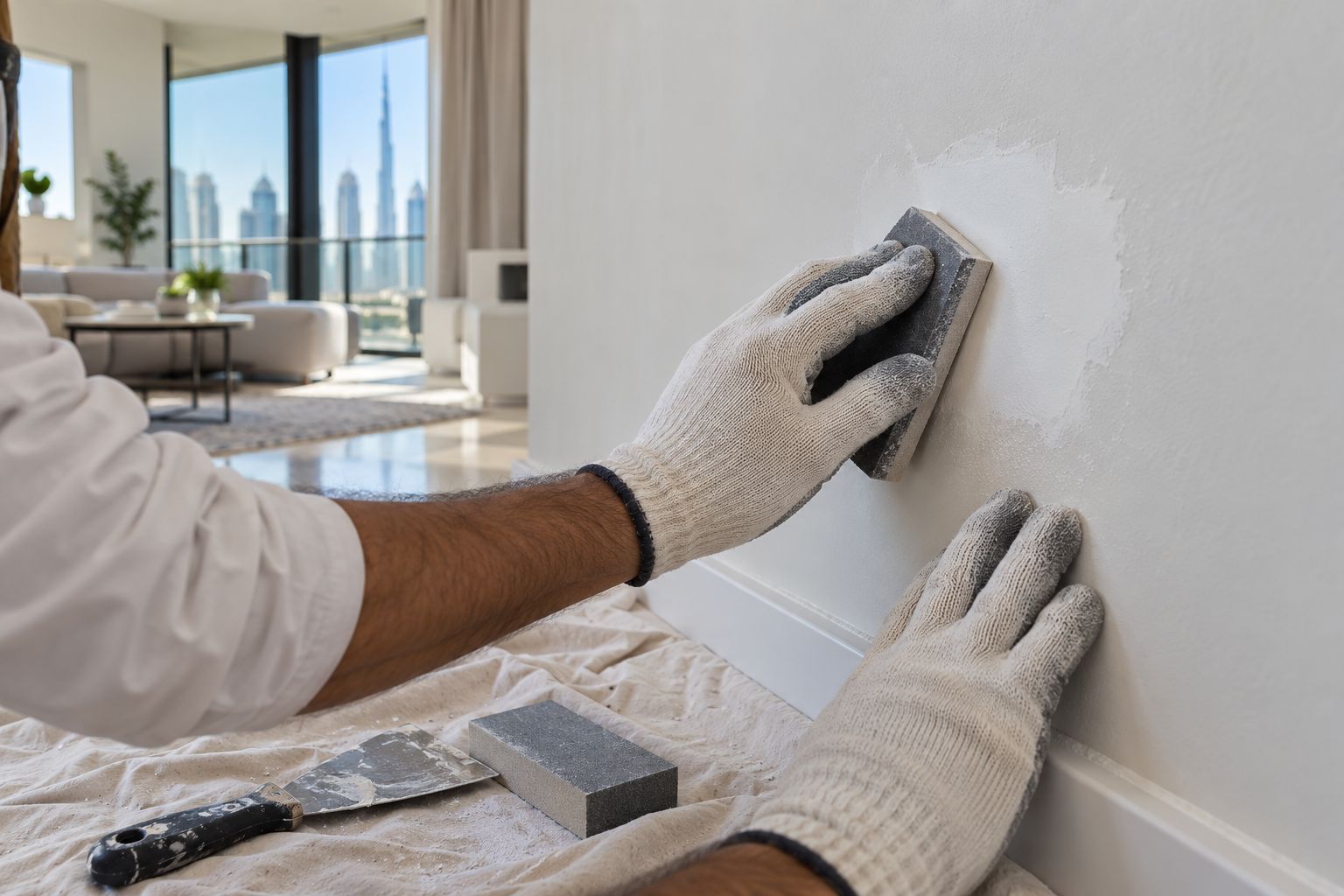
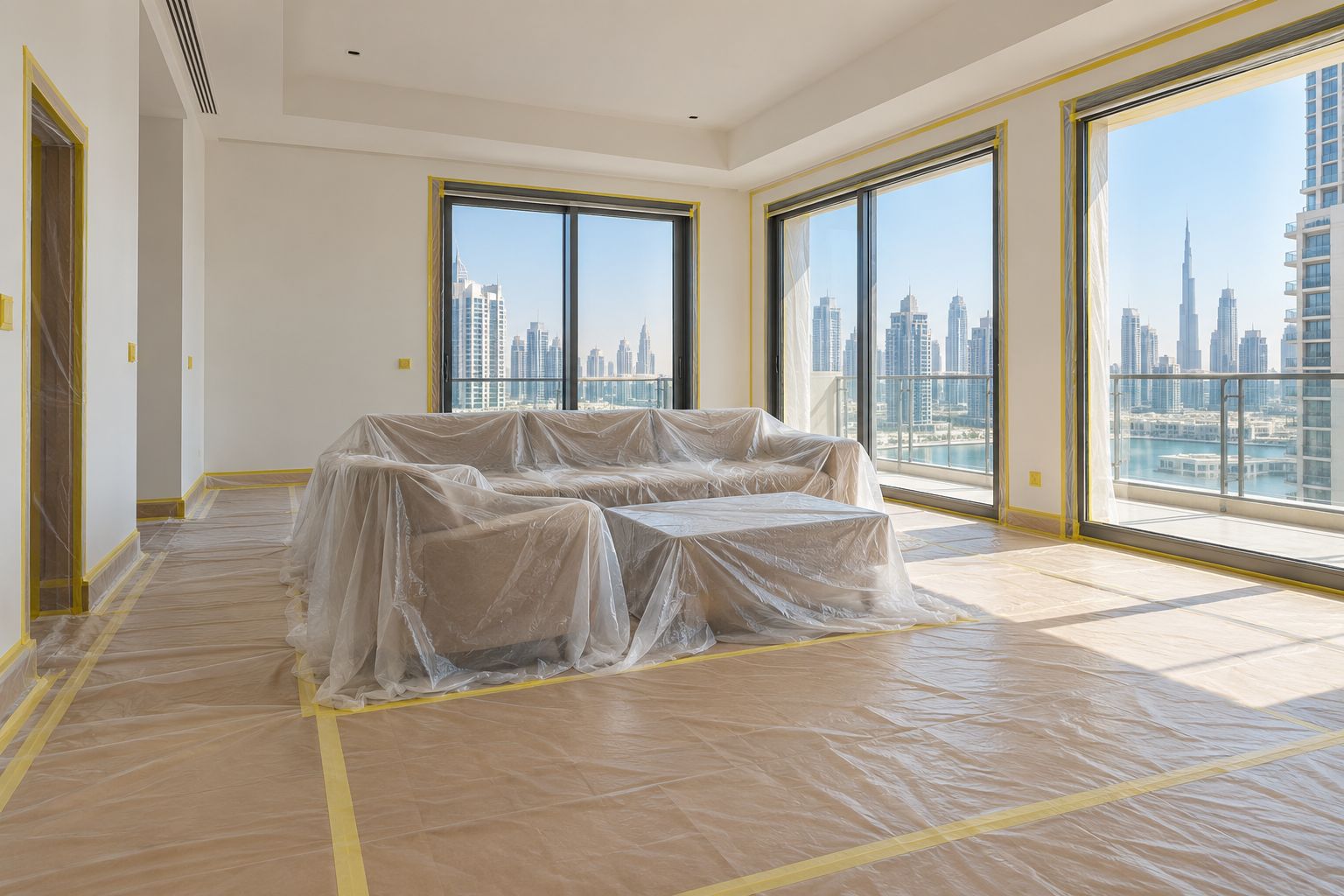
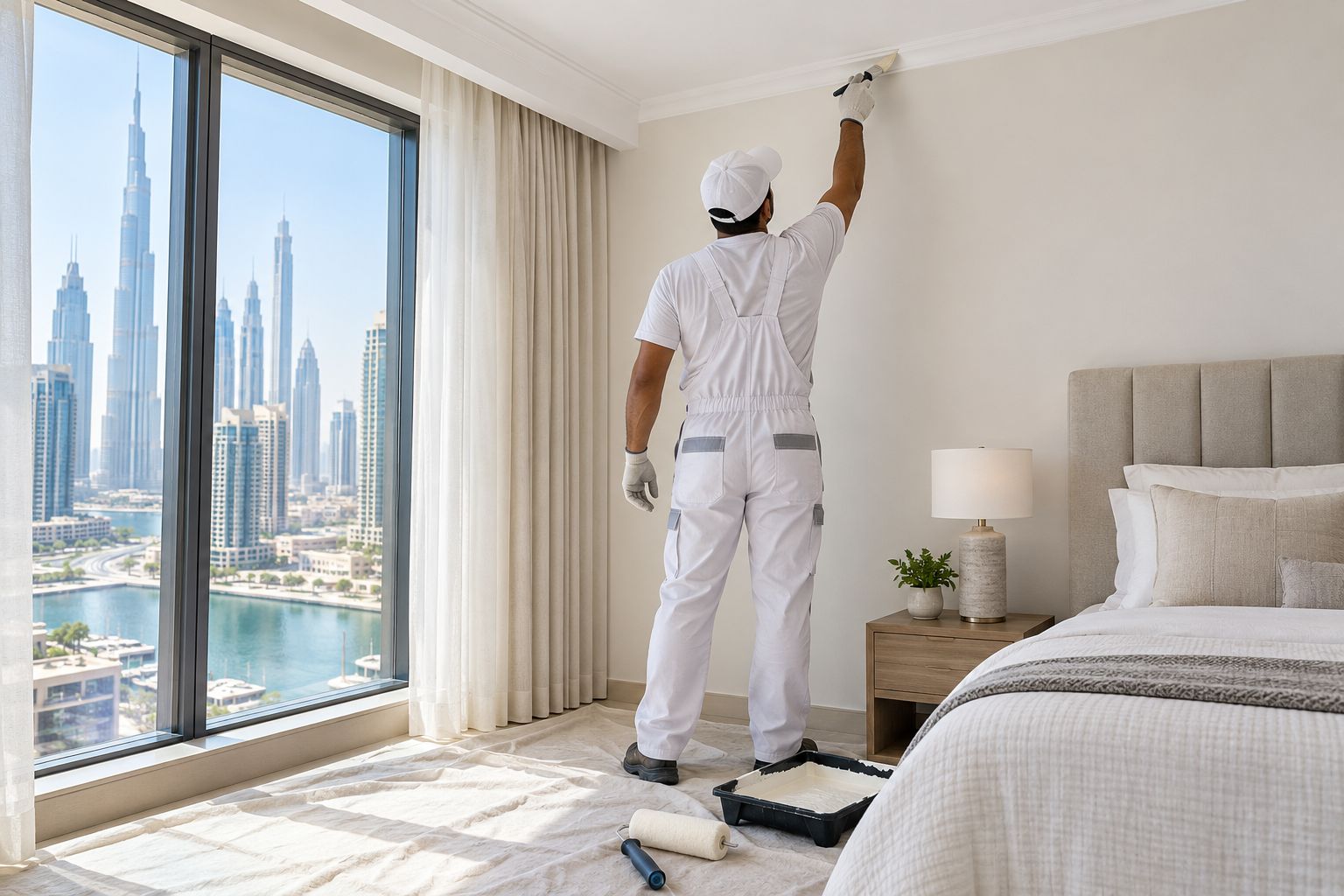
Most people compare painting quotes by the price per room and miss that the paint itself is a small part of the work. A decent job is roughly three stages: preparation (protecting floors and fittings, filling holes, sanding, spot-priming), application (primer where needed, then two coats, cutting in at edges and ceilings) and finishing (touch-ups, removing masking, cleaning up). The quality difference between a good and a mediocre painter is almost entirely in the first stage.
This page covers interior and exterior painting for apartments and villas across Dubai. It is one service because the questions are the same whatever you call it: wall painting, apartment repaint, villa painting. What changes is the scale, the access, and how much prep the surface needs.
Apartment vs villa: how the job differs
Apartments are interior-only jobs, usually done in a day or a few days depending on size. The practical issues are access and timing. Many towers need contractor registration, a service-lift booking and set working hours, and some require a deposit or permit for works. Walls are often plasterboard partitions mixed with concrete, which affects how patches are made. Corridors and balconies in shared areas are building-managed, so repainting them is usually not part of a unit repaint.
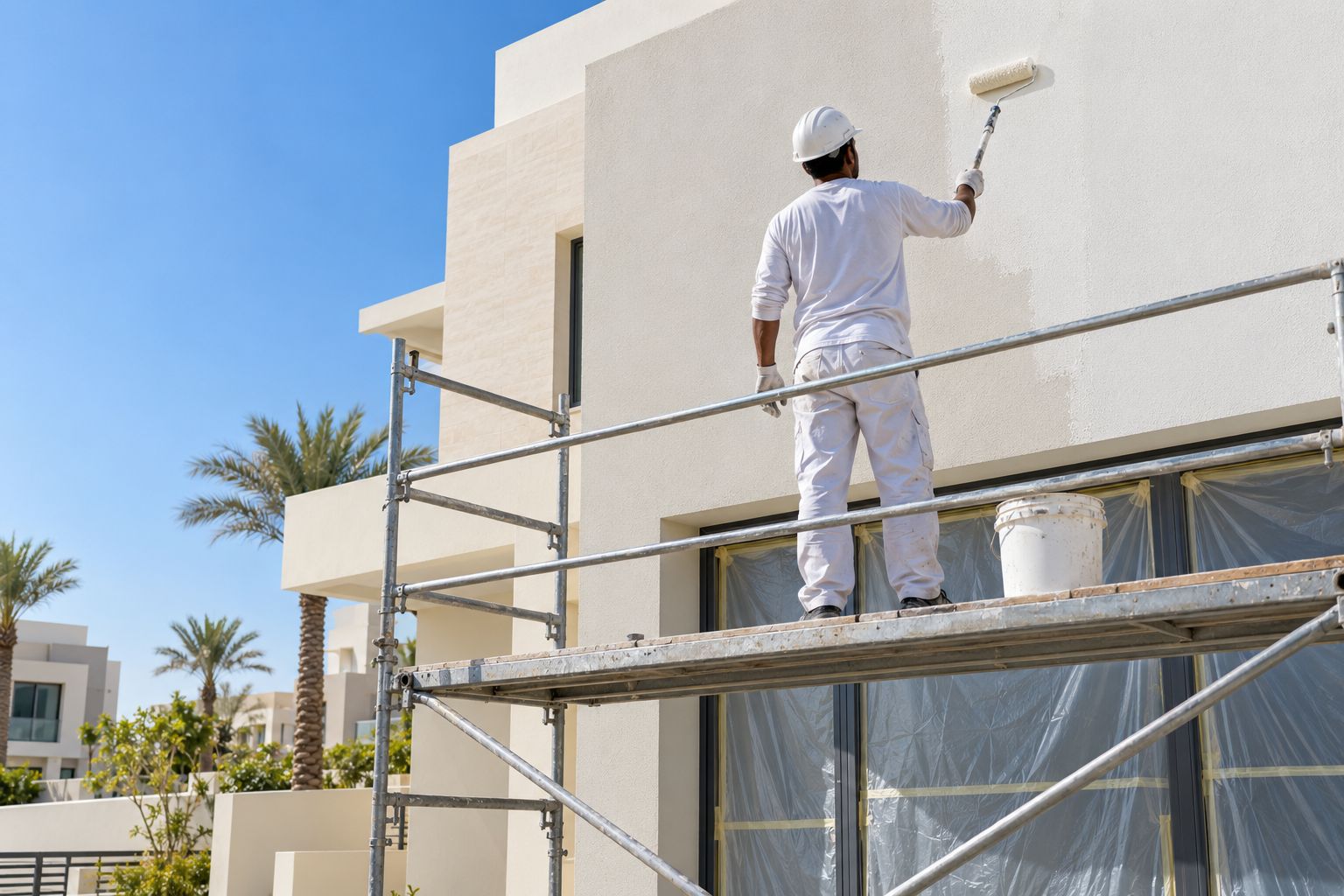
Villas are larger and more varied. There is more wall area, taller ceilings in double-height spaces, staircases that need access equipment, and woodwork, ceilings, boundary walls and external rendering as separate surfaces. Villa jobs are usually scoped room by room, with the exterior quoted as its own item and scheduled around weather and access. Gated communities can restrict contractor hours and access at the gate, and some have rules about exterior colours, so check with your community management before choosing a colour.
Move-out repaint and tenancy handover
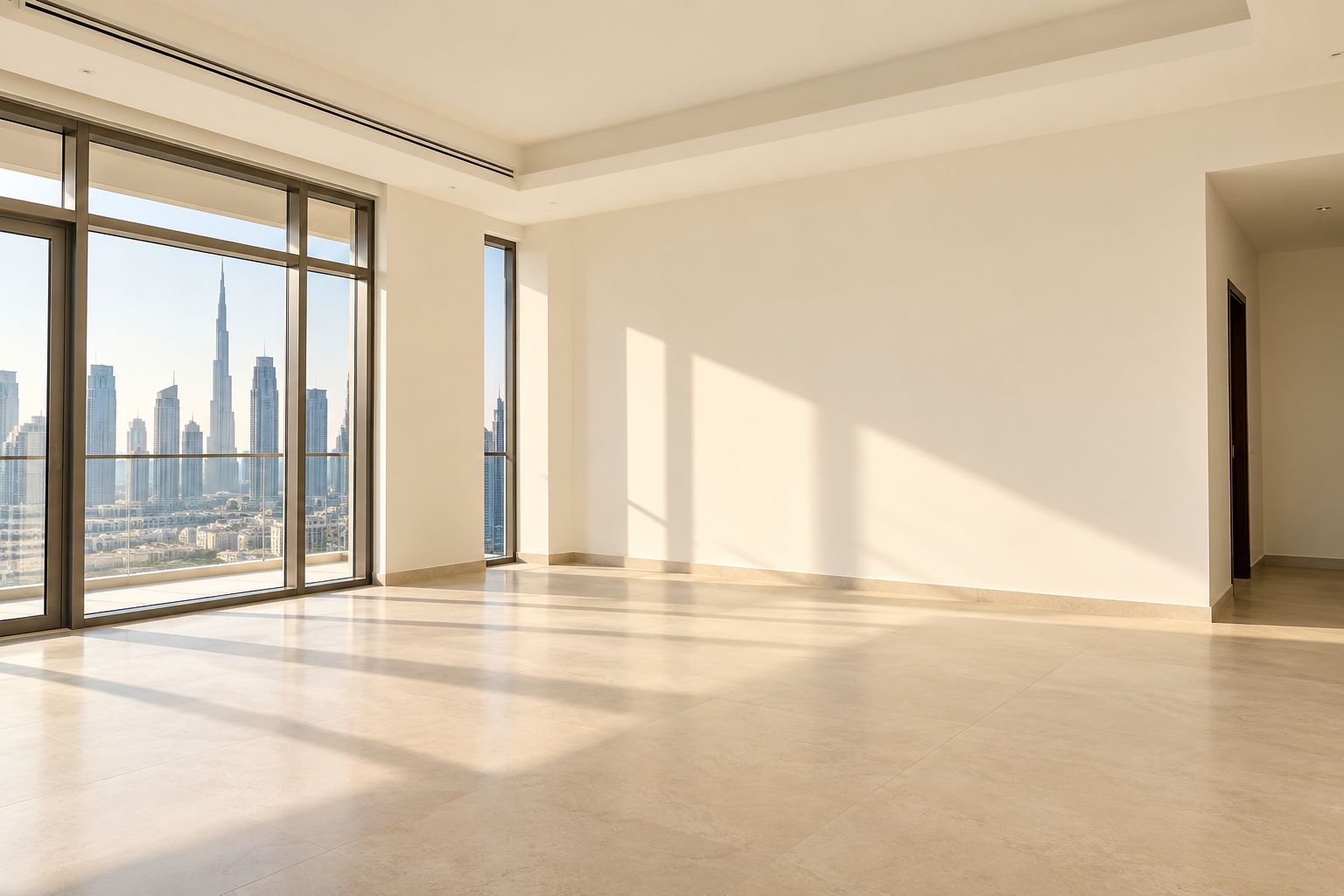
A repaint at move-out is one of the most common reasons people look for painting services in Dubai, and also one of the most misunderstood. What you owe depends on your tenancy contract and the condition of the walls when you moved in. Many contracts expect the unit returned in the condition it was received, allowing for normal wear and tear; some landlords expect a repaint regardless of condition, others only for damage. Practices differ, so confirm the position in writing instead of assuming.
Practical points that help:
- Compare with your handover photos. If you moved in to freshly painted walls, mark and stain damage is easier to argue as beyond normal wear.
- Fix the cause before you repaint. Drill holes, scuffs and marks are small; mould spots or water stains need the source resolved first.
- Ask the landlord what finish and colour they expect. Neutral off-white is the typical default, but check.
- Plan the timing. Walls need to dry and the smell needs to clear before the final inspection, so allow time between painting and handover.
If you are doing fitting work before painting, such as removing shelves and filling holes, a handyman visit can prepare the walls so the painters start on a clean surface. Our guide to preparing an apartment for painting has the full sequence.
Colour, finish and surface prep
Colour. Light neutrals are the practical default in rentals and resale because they suit any furniture and make the next repaint easier. For a home you own, test the colour on the wall: Dubai light is strong and direct, and a colour that looks warm in the shop can look flat under the white LED lighting many apartments use in the evening. A test patch seen in morning, afternoon and evening light saves expensive regret.
Finish. Matt finishes hide wall imperfections but mark and scuff more easily. Satin or washable finishes handle cleaning and suit kitchens, hallways, kids’ rooms and bathrooms. Ask what the paint is rated for and whether it is suitable for humid rooms.
Prep. This is where quotes differ most. A proper job includes:
- Protecting floors, fittings and furniture.
- Patching holes and dents, then sanding smooth.
- Treating stains and damp marks (after the source is fixed), with a stain-blocking primer where needed.
- Priming bare patches or major colour changes so the finish coats look even.
- Two finish coats, with proper drying time between.
A quote that skips all of this and says only “two coats” is quoting a surface that is already perfect, which is rare.
Dubai conditions: humidity, dust and sun
Humidity. Bathrooms, kitchens and rooms with poor ventilation hold moisture, especially in summer. Paint on a damp wall blisters and peels, and mould appears behind furniture on external walls. Moisture should be addressed before painting, and humid rooms should get a suitable washable or moisture-resistant finish.
Dust. Fine dust settles on everything and into wet paint. Closing windows during application helps the finish but works against ventilation, so painters normally balance this. Dust in the air can leave a slightly gritty finish; wiping walls before painting matters.
Sun and heat on exteriors. External walls take direct sun, heat cycling, and occasional humidity and rain. Exterior paint fades, chalks and eventually cracks, and the south and west faces age fastest. Exterior jobs should be done in suitable conditions. Painting in strong midday sun can make paint dry too fast and reduce adhesion. Ask the partner which product they use and how they schedule exterior coats.
What affects the quote
We do not quote a price per room in the abstract, because the factors that move the price are specific:
- Area and ceiling height to be painted, and whether ceilings and woodwork are included.
- Condition of the surface: number of patches, stains, peeling areas and cracks.
- Colour change: going from dark to light needs more coats and a primer.
- Furnished or empty: moving and covering furniture adds time.
- Paint product and finish: a washable or specialist finish costs more than standard emulsion.
- Access: scaffolding or platforms for exteriors and double-height spaces, and building working-hour limits.
- Timing: how fast you need it, and the working window the building allows.
Send photos of each room, with the approximate size and any problem areas, and you get a written scope you can compare line by line.
Drying, ventilation and getting back in
Paint is dry to the touch long before it is fully cured, and the smell fades over days rather than hours. Keep windows open during and after painting where possible, and ask the partner for the manufacturer’s recoat and cure times for the product being used. Avoid putting furniture back against fresh walls, hanging pictures or scrubbing the paint until it has cured. If you have children, pets, or anyone sensitive to smells, ask about low-odour products and plan to stay elsewhere for the first night or so.
What is NOT included, and when you do not need painting
Painting is not a fix for a defect. It does not stop a leak, cure rising damp, or repair structural cracks. If the problem is a leaking pipe, plumbing comes first; if you have a wide or growing crack, it needs inspection before any paint goes on.
You may also not need a full repaint at all. If the walls are sound with scuffs and a few holes, patching and spot repainting a wall or two can be far cheaper than painting the whole unit. Matching old paint exactly is difficult though, so a patched wall may need the whole wall repainted corner to corner to avoid a visible patch.
Typical exclusions, unless the quote says otherwise: moving heavy furniture, wallpaper removal, specialist finishes, repairs for damp or structural problems, and access equipment beyond the agreed scope.
What to send on WhatsApp
- Property: apartment or villa, building or community, floor, and number of bedrooms.
- Scope: which rooms, ceilings, woodwork, balcony, or exterior.
- Photos: each wall to be painted, plus close-ups of stains, peeling, cracks or damp.
- Colour and finish: current colour, desired colour, or “same as existing”.
- Condition: empty or furnished, and whether this is a move-out repaint.
- Timing and access: target dates, building working hours and any permit needed.
Villa owners who have a regular programme of small repairs may also consider a villa maintenance contract, which can include touch-up painting after repairs.
Frequently asked questions
- How much do painting services cost in Dubai?
- There is no honest flat rate, because the price follows the area to paint, the condition of the walls, the number of coats and whether furniture must be moved. A clean repaint of a vacant unit costs less than walls that need patching, stain blocking and a colour change. Send photos, the unit size and the finish you want on WhatsApp and you get a written quote before work is booked.
- Is painting different for an apartment and a villa?
- Yes. Apartments are mostly interior work with building access rules, lift booking and limited working hours. Villas add more wall area, higher ceilings, staircases, boundary walls and an exterior exposed to sun, dust and humidity. A villa often needs scaffolding or access equipment for the outside and a longer schedule, so the scope is usually quoted room by room and for the exterior separately.
- Do I need to repaint when I move out of a rented apartment?
- It depends on your tenancy contract and the condition of the walls. Many contracts require the unit to be returned in the condition it was handed over, allowing for fair wear and tear, and landlords differ on whether a repaint is expected. Check your contract and any handover photos, and agree the position with your landlord before spending money. We do not assume what any landlord will require.
- How long does painting take and when can I use the rooms?
- Duration depends on size and prep, so the quote states the expected number of days. Walls need to dry between coats, and fresh paint needs ventilation, so keep windows open and AC running where the paint specification allows. Many homeowners wait until the smell has faded before sleeping in a freshly painted room. Ask the partner for the drying times of the paint product they plan to use.
- Do I need to move my furniture before the painters arrive?
- Clear what you can, and tell us what stays. Small items, wall art, curtains and anything fragile should be removed. Large furniture is usually moved to the centre of the room and covered, but this takes time and space, so say in your message whether the home is empty or lived in. Our guide to preparing an apartment for painting has a room-by-room checklist.
- What colour and finish should I choose for Dubai homes?
- Light neutral colours are the practical default because they hide marks, suit most furniture and are easiest to repaint at handover. Finish matters more than people expect: matt hides wall imperfections but marks easily, while satin or washable finishes suit kitchens, hallways, children's rooms and bathrooms. Ask for a test patch on the wall, because paint looks different in direct sun than under AC-lit evening light.
- Can you paint over damp patches, peeling paint or cracks?
- Not safely until the cause is found. Painting over damp, a leak or flaking caused by moisture hides the symptom, and the patch returns. Peeling and bubbling need the loose paint scraped back, the surface treated and primed, and any leak fixed first. A hairline crack can be filled and painted; a wide or growing crack needs inspection. Send photos so the scope is honest.
- What does the quote include and what is not included?
- A good quote lists the rooms and surfaces, prep work (filling, sanding, primer), number of coats, the paint product and finish, protection of floors and fittings, and clean-up. Typically not included unless stated are moving heavy furniture, repairing damp or structural problems, ceiling or woodwork painting not listed, wallpaper removal and access equipment for tall exteriors. Check the written scope matches what you expect.
Related services
Jobs people often book alongside this one.
Related guides
Straight answers to the questions people ask before booking this service.