
How to Choose a Paint Finish for Dubai's Climate: Matt, Silk or Satin
Quick answer
For most Dubai homes, matt or a low-sheen finish suits bedrooms, living rooms and ceilings because it hides wall imperfections and glare, while silk or satin suits kitchens, bathrooms, hallways and children's rooms because it wipes clean and copes better with humidity. Strong sun and dust make test patches and good prep more important than the finish name. Ask the painter what the product is rated for.
On this page
- Why the finish matters more than people expect
- What matt, silk and satin mean
- How Dubai conditions change the choice
- Choosing by room
- Finish, colour and wall condition work together
- Why prep matters more than the finish name
- Questions to ask the painter
- Common mistakes
- A simple rule of thumb
- What to send when you ask for a quote
Why the finish matters more than people expect
Most people choose a paint by colour and leave the finish to the painter, then wonder why one wall looks flat and chalky while another shows every roller mark. The finish is the sheen of the dried paint, and it changes how a wall looks, how it ages and how easily it cleans.
In Dubai the choice is shaped by a few practical things: strong daylight, humidity in kitchens and bathrooms, fine dust, and AC-cooled air that keeps interiors dry in some rooms and damp in others. This guide helps you match finish to room, with the caveat that product names and sheen levels vary between manufacturers. It does not recommend brands, and your painter should tell you what product they plan to use and what it is rated for.
If you are also deciding how to prepare the rooms, our guide on preparing an apartment for painting in Dubai covers the sequence.
What matt, silk and satin mean
The finish names describe how much light the dried paint reflects.
| Finish | Look | Strengths | Weaknesses |
|---|---|---|---|
| Matt | Flat, soft, no shine | Hides wall imperfections and glare, easy to touch up in some products | Marks and scuffs more easily, can be harder to wipe clean |
| Silk (mid sheen) | Gentle sheen | Wipes cleaner than matt, suits busy rooms | Shows imperfections and roller marks more than matt |
| Satin (low-gloss) | Noticeable sheen | Tougher and easier to wash, copes better with moisture | Shows every flaw in the wall, can look glossy in direct light |
Names are not standardised. One company’s silk can look like another’s satin, and washability depends on the product, not just the sheen. Compare the data sheet or ask for a sample, not the name on the tin.
How Dubai conditions change the choice
Strong, direct sun
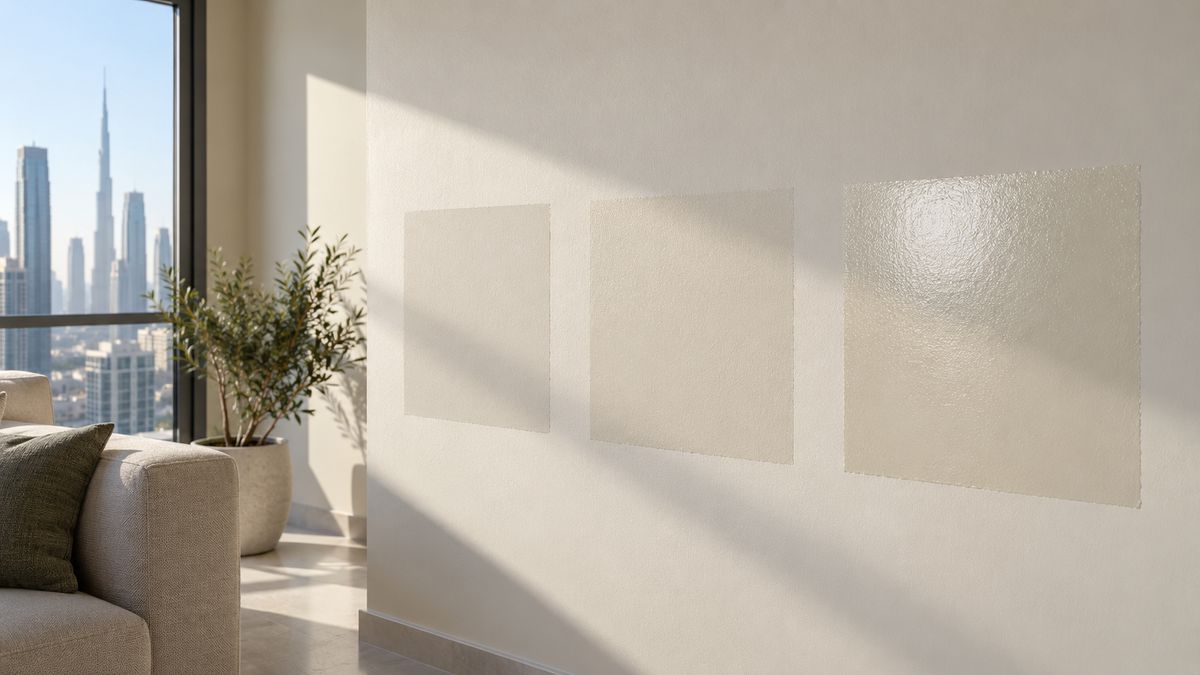
Dubai daylight is bright and often falls at a low angle across walls. That “raking light” exaggerates any unevenness, so higher sheens show patches, roller marks and plaster flaws more than they would under softer light. Matt or low-sheen finishes are more forgiving in rooms with large windows and balcony doors. Sunlight also fades some colours near windows over time, especially strong or saturated shades.
A test patch is the best tool here. See it in morning, afternoon and evening light before painting a full wall.
Humidity
Humidity is not constant in Dubai homes. AC keeps most living areas dry, but bathrooms, kitchens, laundry rooms, storage rooms and external walls behind furniture can stay damp, particularly in summer.
- In humid rooms, choose a washable, moisture-resistant product and a sheen that wipes clean, usually silk or satin.
- Let each coat dry properly. High humidity slows drying, and rushing coats leads to blistering and peeling.
- A finish does not fix damp. If a wall is wet, bubbling or showing black spots, the source needs fixing first, whether that is a leak, a sealant failure or condensation. A plumbing visit may come before any painting.
Dust
Fine dust gets into rooms through doors and ventilation and can settle on wet paint. A smoother, harder finish tends to hold less dust and wipes clean more easily than a very flat one. During application, good ventilation and clean surfaces matter more than the finish name.
AC and temperature swings
Cool interiors with hot, humid air outside can cause condensation on cold surfaces such as external walls and ceilings near AC outlets. If you see recurring damp patches or mould in those spots, treat them as a moisture problem, not a paint problem.
Choosing by room
Living rooms and bedrooms
Matt or low sheen. These rooms usually need a calm look that hides small flaws and doesn’t reflect lamps or sunlight. If you have children or pets who touch walls, a washable low-sheen product is a better compromise than a very flat one.
Ceilings
Matt. It hides joins and imperfections and avoids glare from lights. Ceilings in bathrooms and kitchens may need a moisture-resistant matt product instead of standard ceiling paint.
Kitchens
Silk or satin on walls near the hob, sink and counter. Grease and splashes need wiping, and a more washable finish helps. A good extractor fan reduces what reaches the walls in the first place.
Bathrooms
Silk or satin rated for humid rooms, with a mould-resistant product if recommended by the supplier. Ventilation is the real defence. If the room has no working extractor or window, ask the painter and a handyman about fixing that before painting.
Hallways, stairs and children’s rooms
Silk or a washable low-sheen product. These walls get scuffed by bags, hands and furniture, and being able to wipe them is worth more than a dead-flat finish.
Doors, skirting and trim
Satin or a more durable finish. Trim takes the knocks, and a tougher surface is easier to clean. Check with the painter whether doors and frames are part of the quote, since they are often separate items.
Villa exteriors
Exterior walls face sun, heat cycling, dust and occasional humidity or rain. Use a product intended for exterior masonry, and expect south and west faces to age fastest. Ask which product is proposed and how coats are scheduled around heat, since painting in strong midday sun can make paint dry too quickly. For villa owners, villa maintenance contracts can include touch-up painting after repairs, which keeps walls in shape between full repaints.
Finish, colour and wall condition work together
A sheen that looks good on a perfect wall can look poor on an average one. Before choosing:
- Check the wall. Uneven plaster, patched holes and old roller marks are more visible with higher sheen. If the surface is not perfect, choose a lower sheen or ask for more prep.
- Think about colour depth. Darker and more saturated colours show scuffs and marks more, and in matt finishes they can be harder to touch up. Light neutrals are the practical default in rentals.
- Think about touch-ups. Matt can be easier to touch up in a small area, but matching an old wall exactly is difficult in any finish. Painting the whole wall corner to corner avoids a visible patch.
Why prep matters more than the finish name
A premium sheen on a poorly prepared wall will look worse than a modest finish on a well-prepared one. Quality depends on:
- Protecting floors and fittings.
- Filling holes and dents, then sanding smooth.
- Treating stains and damp, after the source is fixed.
- Priming patches and big colour changes.
- Two finish coats with proper drying between.
Our painting services page explains how a job is structured and what affects the quote.
Questions to ask the painter
- What product and finish do you propose for each room, and what is it rated for?
- Is it suitable for humid rooms, kitchens and bathrooms, or for exterior use?
- How many coats are included, and what drying time is needed between them?
- Can you do a test patch on the wall?
- Are ceilings, doors and trim included, and in which finish?
- What is the cure time before I can wipe walls or put furniture against them?
- Is a low-odour product available if people will stay in the home?
Independent partner painters do the work, and Dubai Service Hub coordinates the quote, with the scope, product and finish written down before work starts.
Common mistakes
- Choosing a high sheen to hide marks. It does the opposite on uneven walls.
- Using the same finish in every room, which ignores kitchens and bathrooms.
- Painting over damp and expecting a washable finish to hold.
- Choosing from a swatch, not a test patch seen in morning and evening light.
- Skipping the written product and finish line in the quote, then arguing about it afterwards.
- Ignoring ventilation in bathrooms and kitchens.
- Assuming names are standard, when silk and satin vary between manufacturers.
A simple rule of thumb
Use the flattest finish that you can live with in each room. Move up one level of sheen where walls will be wiped, splashed, touched by children or exposed to moisture. Keep high sheens for trim. Then check the choice with a test patch in your own light before the painters start.
What to send when you ask for a quote
Send the property type and community, rooms to paint, photos of each wall and any stains or damp, the current and desired colour, whether you want a particular finish in kitchens, bathrooms or hallways, whether doors and ceilings are included and your timing and access rules. If you are repainting at the end of a tenancy, mention that and check the expected colour and finish with your landlord in writing.
Frequently asked questions
- What is the difference between matt, silk and satin paint?
- The terms describe how much light the dried paint reflects. Matt reflects very little, hides surface flaws and gives a soft look, but marks more easily. Silk has a gentle sheen and wipes cleaner. Satin is a little shinier and tougher again. Exact sheen levels and names differ between manufacturers, so compare the product data sheet, not the label alone.
- Which paint finish is best for a Dubai apartment living room or bedroom?
- Matt or a low-sheen finish is the usual choice for living rooms, bedrooms and ceilings. It hides small wall imperfections and does not throw back glare from strong daylight or ceiling spotlights. If the room is heavily used by children or pets, consider a more washable low-sheen product instead of a dead-flat matt.
- Which finish should I use in a kitchen or bathroom in Dubai?
- A silk or satin finish is more practical because it wipes clean and handles steam and splashes better. Ask for a product rated for kitchens and bathrooms or for humid rooms. Good ventilation matters as much as the paint, since no finish will cope with a wall that stays damp. Fix any leak before painting.
- Does humidity in Dubai affect which paint I should choose?
- It matters most in bathrooms, kitchens, laundry rooms and poorly ventilated rooms, especially in summer. Choose a washable or moisture-resistant product there and let each coat dry fully. Humidity also slows drying, so the painter may need longer between coats. Paint cannot cure damp that comes from a leak, so find the source first.
- Will strong Dubai sun fade interior or exterior paint?
- Exterior walls take the most sun and heat, and exterior paint can fade, chalk or crack over time, with south and west faces typically ageing fastest. Interior walls near large windows can fade or yellow too, particularly with some darker or saturated colours. Ask the painter which product is intended for exterior or sun-exposed use.
- Is a glossy or shiny finish a good idea on interior walls?
- Rarely on large wall areas. Higher sheen shows every roller mark, patch and wall imperfection, and strong daylight exaggerates it. Higher sheens are better kept for doors, skirting and trim, where durability matters more than a flawless surface. If your walls are uneven, a lower sheen is more forgiving.
- How do I test a paint finish before committing to a whole room?
- Ask for a test patch, or paint a sample board, and look at it in morning, afternoon and evening light, with and without the AC lighting on. Sheen looks very different in direct sun than under artificial light. Check it next to the furniture and floor, and wipe it once it has dried to see how it handles marks.
Read next
Related services
Need this sorted rather than researched?
Send a WhatsApp message with what you are seeing and we will come back with a quote.